On this page
- Start with the guest rather than the room
- Walk the route from sleeping space to bathroom
- Review exits from the actual sleeping location
- Make the alarm plan understandable
- Keep warmth comfortable within the equipment instructions
- Set aside practical luggage and personal item space
- Include shared spaces in the overnight plan
- Give arrivals a short useful welcome
- Keep insurance questions separate from room preparation
- Save a host walkthrough worksheet for the next visit
- Sources and reference material
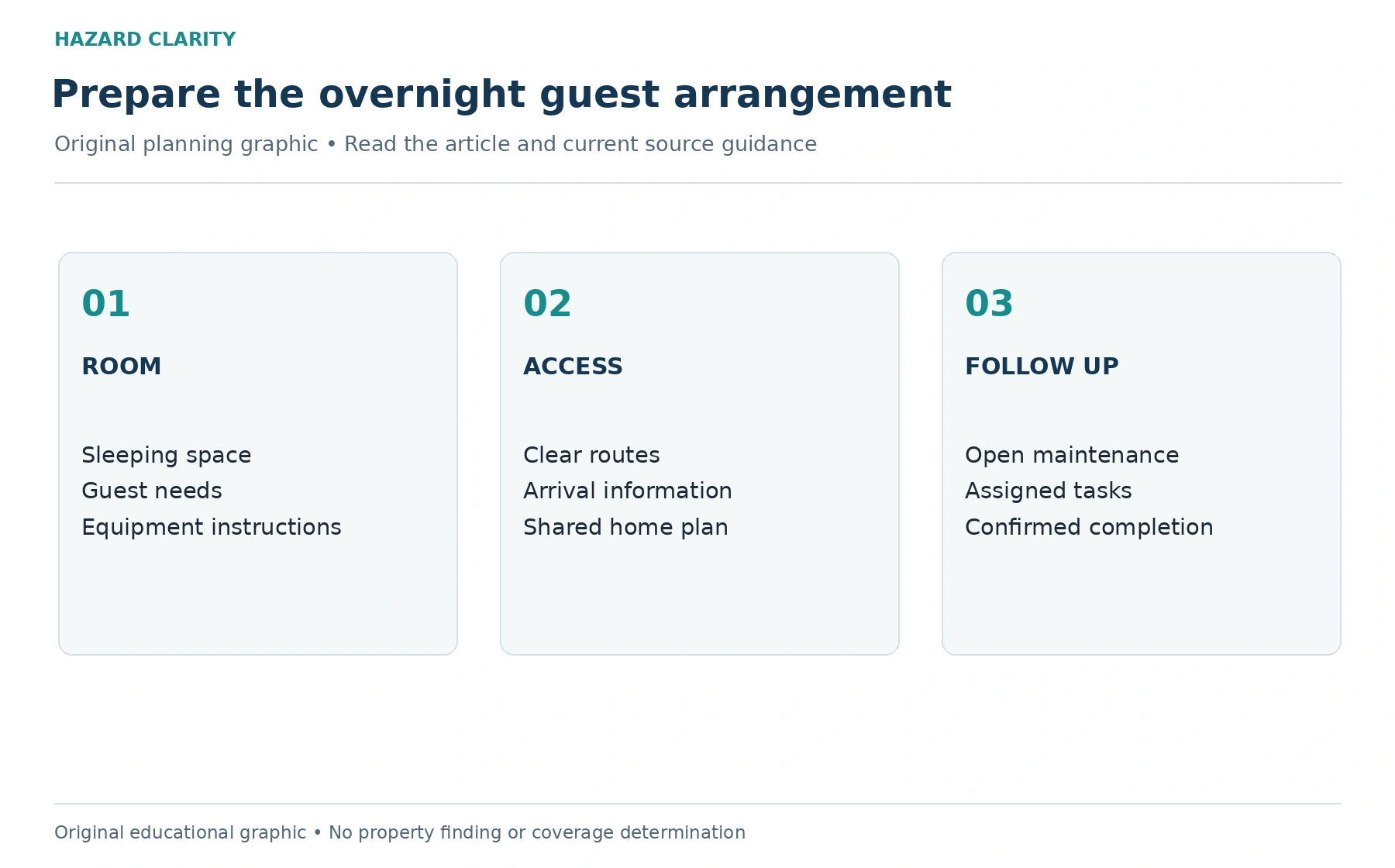
An overnight guest should be able to find the bathroom, move through the home, and understand what to do if an alarm sounds without waking the host for a tour. Before Thanksgiving visitors arrive, walk the spaces they will actually use. Focus on sleeping arrangements, lighting, clear routes, and a brief welcome that answers practical questions.
This overnight holiday guests home checklist is for friends and family staying in an occupied home. Paid lodging raises different insurance and local requirements, which our November 22 article addresses. Here, the goal is a comfortable visit supported by thoughtful household preparation. A spare room does not need a hotel makeover. It needs an arrangement that works for the people staying there.
Start with the guest rather than the room
Ask about needs before deciding where someone will sleep. A guest who has trouble with stairs may prefer a suitable room closer to the bathroom. Someone traveling with a young child may need a different arrangement from an adult visiting alone. Let the guest explain what would help; avoid making assumptions based on age or appearance.
Discuss the expected length of the stay and who will be present. A room that works for one person may become crowded when luggage, children, and extra bedding arrive. Include the ordinary furniture and equipment in the plan instead of imagining the room as empty floor space.
Choose sleeping equipment appropriate to the person and follow its instructions. For an infant or child, use current age-specific guidance and suitable equipment rather than treating an adult guest bed as interchangeable. If you cannot provide the needed arrangement, discuss another option early. Clear expectations make arrival easier for everyone.
Walk the route from sleeping space to bathroom
Try the route as your guest will use it, including at night with the lighting you intend to provide. Look for stored items, loose objects, awkward door movement, or a step that someone unfamiliar with the house might miss. Clear ordinary obstructions and arrange appropriate lighting before luggage fills the space.
Keep cords and chargers out of walking routes. A phone charging beside the bed is convenient; a cable stretched across the doorway creates another task every time someone enters. Use products according to their instructions and seek qualified help if an electrical arrangement is uncertain.
Tell the guest about a feature that may be unfamiliar, such as a hallway switch outside the bedroom or a bathroom door that opens into a narrow passage. Explanation can help, but it does not replace fixing a known problem. A loose handrail or damaged surface deserves an appropriate repair conversation, especially when guests will rely on it overnight.
Review exits from the actual sleeping location
Use the USFA home fire escape resource to review the household plan. Its guidance includes identifying two ways out of each room, keeping doors and windows unblocked, and choosing an outside meeting place. Apply that review to the space your guest will occupy, not only the bedrooms used every day.
Do not improvise a sleeping room in a space whose suitability or required exits you have not established. A basement, converted storage area, or detached room may raise building questions beyond an ordinary host walkthrough. Ask the responsible local office or qualified professional when the intended use is unclear.
Show guests the relevant exits and meeting place in plain language. Explain any assistance arrangements agreed with the people involved. Keep the route usable after beds and suitcases are in position. Reviewing an empty room on Saturday does not settle how it will function once three visitors arrive on Wednesday.
Make the alarm plan understandable
Gather the instructions for the installed smoke and carbon monoxide alarms. Follow the actual model's testing, placement, power, and replacement guidance. If an alarm needs service or the system's operation is uncertain, resolve the question through the appropriate source before the stay.
Consider whether the guest can perceive the alarms provided. Someone with a hearing-related need may require an arrangement beyond the one you normally use. Ask respectfully and obtain suitable guidance rather than assuming that placing a standard alarm closer to the bed solves the issue.
Keep the explanation short when guests arrive: what an alarm means, where to go, and who should be notified. A host should never suggest disabling a device to avoid disturbing visitors. Our November 1 alarm article supplies the fuller record and maintenance workflow; this overnight check concentrates on whether the visitor understands the household arrangement.
Keep warmth comfortable within the equipment instructions
Ask whether the usual room temperature and bedding will work for the guest. Review the installed heating arrangement and any unresolved service recommendation. If the room is regularly colder than the rest of the house, discuss the concern with the appropriate provider rather than assuming that temporary equipment is the answer.
The USFA heating fire safety resource provides official guidance for household heating. Use that alongside the manufacturer's instructions for any equipment you actually plan to use. Guests should know how to request help without adjusting unfamiliar controls themselves.
For example, an overnight visitor may move luggage beside a heater because it is the only open corner. Arrange storage and furnishings around the equipment's requirements before arrival. If you change the room layout, review those requirements again. A space that feels comfortable should also remain usable for the home's normal systems and exits.
Set aside practical luggage and personal item space
Give guests a clear place for bags, shoes, coats, and charging devices. This keeps temporary storage from spreading into the hallway or beside a door. The space can be simple: an available dresser surface, a cleared closet section, or a suitable spot that does not interfere with walking or equipment.
Discuss storage for items requiring special handling directly with the guest. Medication, mobility equipment, or personal valuables may need arrangements you cannot infer from an ordinary packing list. Respect privacy and avoid collecting unnecessary personal information merely to complete a host worksheet.
Think about children and pets already in the home. A visitor's open suitcase may contain items the household normally keeps inaccessible. Agree on an appropriate storage arrangement with the guest, and explain relevant household routines. The aim is to make the room functional while preserving the guest's control over their belongings and personal care.
Include shared spaces in the overnight plan
Walk the kitchen, sitting area, and entry with overnight use in mind. A guest getting water before dawn needs a usable route even if the holiday meal has left extra chairs and serving tables in place. Decide where temporary furniture and dishes will go after dinner.
Explain which spaces and equipment guests may use and where they should ask first. Familiar instructions matter more than a long list of house rules. If an appliance has a known issue or an area is awaiting repair, communicate the practical limitation and arrange suitable professional follow-up.
HC's report and inspection comparison explains why property context and physical evaluation serve different purposes. A location-based report cannot confirm that a guest room, electrical outlet, or stair is suitable. Use the relevant records and qualified evaluation for those questions, then share the household information the guest actually needs.
Give arrivals a short useful welcome
Tell guests where they will sleep, how to reach the bathroom, where luggage belongs, and how to contact you overnight. Show the exits and outside meeting place. Ask whether anything about the arrangement needs to change before everyone settles in.
Use a brief written note if several people arrive at different times. Keep it focused on the home rather than private account details or an entire policy folder. An address, household contact, and clear orientation can be useful without exposing financial records or access information to everyone visiting for dinner.
If another household adult will greet late arrivals, agree on that handoff. The person opening the door should know which room is prepared and whether the guest has a relevant access need. A note that says guest room ready is less helpful than a clear explanation of the actual arrangement and any agreed assistance.
Keep insurance questions separate from room preparation
An ordinary family visit can still prompt questions about liability, special activities, or hired help. Describe the actual gathering to your licensed insurance professional if you need clarification. Avoid treating an overnight stay as automatic proof that coverage changes or that additional insurance is required.
If the insurer requests property information, HC's insurance inspection guide provides background on that kind of review. The company should explain its own requirements and the actual policy. A host checklist cannot establish the outcome of a future claim.
Our November 18 hosting article organizes the wider liability conversation. Keep this room review practical: resolve maintenance concerns, understand the guest's needs, and make the household arrangement clear. If the visit becomes paid lodging or the property's use changes, revisit the insurance question before assuming that the original family-hosting discussion still applies.
Save a host walkthrough worksheet for the next visit
Use four fields for each space: guest need, observed condition, next action, and person handling it. For the hallway, the action might be moving stored boxes. For a loose rail, it might be arranging professional repair. For the bedroom, it might be confirming that the agreed sleeping equipment is available.
Add the date when the result is checked. A planned purchase or appointment does not mean the room is ready. Before arrival, walk the route once more with furniture and baggage space arranged as intended. Keep unresolved questions visible and choose a different arrangement when needed.
Save the worksheet with the home's seasonal records and update it after the visit. A guest may point out something useful that residents stopped noticing, such as an unclear light switch or awkward furniture placement. Make the improvement once, and the next welcome becomes easier. The best overnight plan lets visitors settle in comfortably while keeping ordinary household responsibilities clear.
Sources and reference material
USFA Escape plans • Reviewed October 3 2026.
USFA Heating fire safety • Reviewed October 3 2026.
See this property’s own hazard picture.
Check an address