On this page
- Define the problem before requesting a price
- Match the proposal to the contractor’s identity
- Check Indiana requirements at the local level
- Ask what contractor insurance evidence establishes
- Read the scope as a description of a finished result
- Connect payments to the agreement
- Decide how changes will be approved
- Plan for access and unfinished areas
- Keep claims work and project authorization distinct
- Close the project with evidence you can use
- Sources and reference material
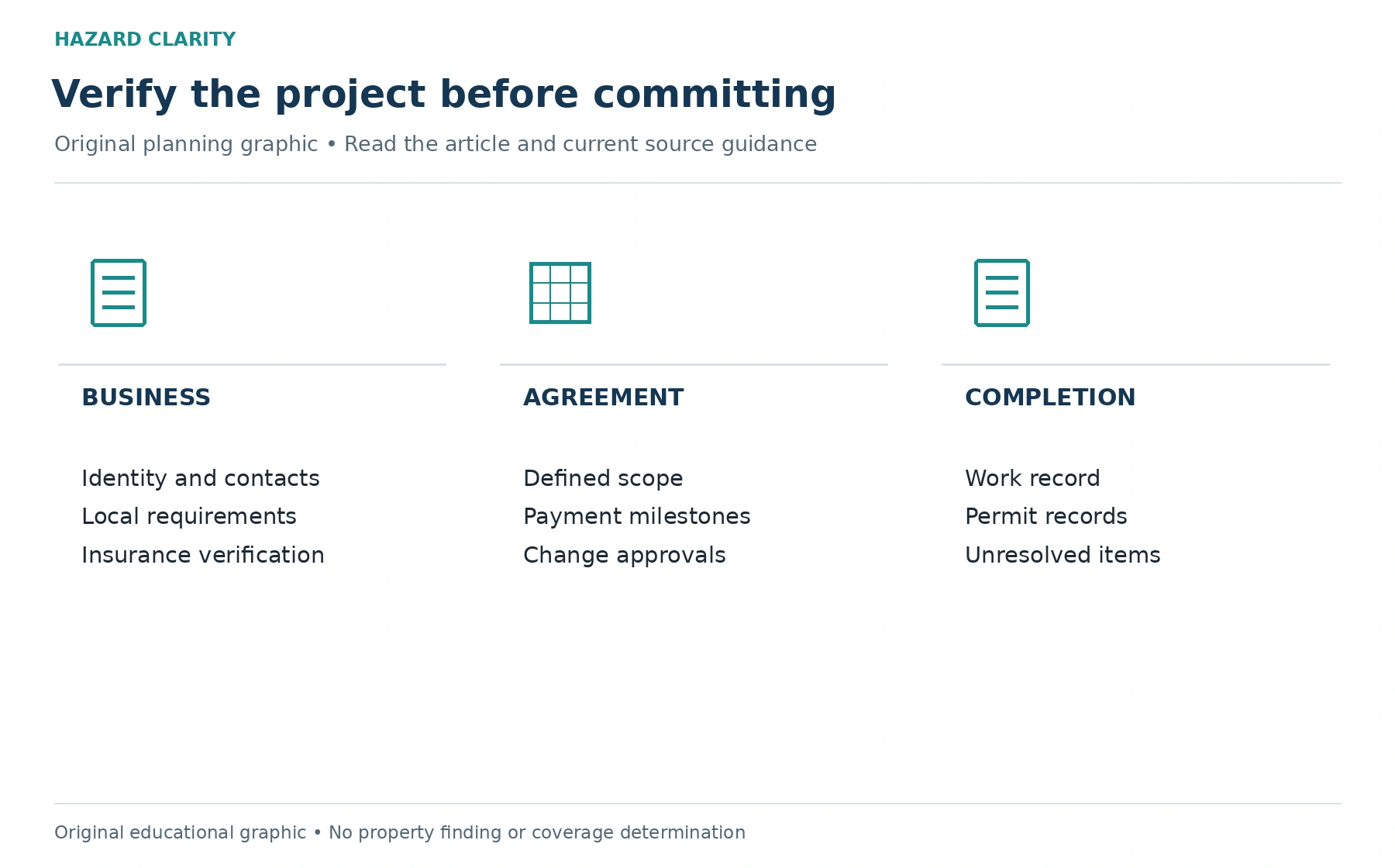
A fall repair project should begin with a clear description of the work, the company doing it, and the decisions still waiting for an answer. Whether you are replacing a damaged exterior component or arranging several smaller jobs before winter, that preparation makes proposals easier to compare and gives you a usable record after the crew leaves.
For Indiana homeowners, the review also includes local licensing and permit questions and the state’s consumer protection resources. This guide organizes that conversation without interpreting your contract or prescribing construction methods. The point is to understand what you are buying, confirm the appropriate requirements with the responsible offices, and keep insurance questions connected to the actual project.
Define the problem before requesting a price
Describe the condition, location, and result you want. A loose handrail at the front steps needs a different conversation from a full entrance redesign. A recurring roof leak may require investigation before anyone can quote the appropriate repair. Photographs taken safely and existing reports can help a contractor understand the starting question.
Separate observations from conclusions. You may know that water appeared beside a window after rain without knowing which assembly needs work. Tell the provider what you saw and ask whether its first visit is an evaluation, a repair, or both. A price attached to an assumed cause can leave the underlying question unresolved.
HC’s report and inspection guide can help distinguish broader property context from physical evaluation. A hazard report may organize location-based questions, but the contractor needs evidence about the component and a defined scope. Keep those records together while preserving the purpose of each.
Match the proposal to the contractor’s identity
Know the legal business name, contact person, and address associated with the proposal. Compare those details with the agreement, invoices, and any verification records. If a salesperson uses a different name from the company signing the contract, ask how the businesses are connected and who is responsible for the work.
Use contact information you have independently confirmed when checking important details. A logo or advertisement alone does not establish qualifications. Ask about experience with the particular work, references for comparable projects, and who will supervise the site. A general claim of experience may not answer a question about your specific repair.
If subcontractors will be involved, ask which tasks they will perform and how communication will work. You should know whom to contact when a question arises without having to choose between several crews. Put that contact route in the agreement or project record so it remains clear throughout the job.
Check Indiana requirements at the local level
The Indiana Attorney General’s home improvement guidance advises homeowners to check licensing requirements with their city or county building department. Use the actual property location and proposed work when asking. Requirements can differ by trade, community, and project.
Ask the responsible office whether a permit or inspection is needed, who should obtain it, and what documentation you should retain. Avoid treating a contractor’s general statement that no permit is necessary as the final answer if you still have a question. Confirm the requirement through the office that administers it.
Keep any reference number, office response, and project description together. A permit record for an earlier project may not apply to the current work. Likewise, a registration or license in one place may not settle what is required elsewhere. Verification should match the business, the work, and the jurisdiction you are discussing.
Ask what contractor insurance evidence establishes
Request the appropriate evidence of insurance and ask how to confirm current information with the issuing agent or company. Match the business name and relevant dates to the contractor doing the work. If you need help understanding the evidence, use your licensed insurance professional rather than interpreting the document from its title alone.
A certificate is not a guarantee that every possible loss will be covered, nor does it establish workmanship quality. Ask which questions concern the contractor’s protection and which concern your own property policy. A proposal described as fully insured should still lead to a focused verification conversation.
Tell your insurer about the project when you have questions about disclosure, changes to the building, or use of the property during work. Explain whether parts of the home will be inaccessible or whether you plan to move out temporarily. Keep the insurer’s answer beside your own policy rather than attaching it to a contractor’s promise.
Read the scope as a description of a finished result
A useful scope identifies the work location, materials or specifications where relevant, and the included tasks. It should also make exclusions visible. Does window work include the surrounding finish? Does gutter work include the downspout connection? Does cleanup include removal of old materials? Ask before assuming the price covers the whole outcome you pictured.
Compare proposals using the same questions. One may include investigation and restoration while another includes only replacement of a visible component. A lower price is not automatically a better value if it buys a different service. Ask each contractor to explain its intended result and any unresolved assumptions.
If a specification will be supplied later, identify when you will review it and how approval will be recorded. Avoid letting a vague description become a commitment to an unknown material or method. Keep changes traceable so the final agreement reflects what you actually approved, rather than a collection of informal conversations.
Connect payments to the agreement
Read the payment schedule and understand what each payment corresponds to. Ask what milestone, delivery, or completed work should be documented. A deposit, progress payment, and final payment serve different purposes. Do not assume that a calendar date alone means the associated work has been completed.
If the schedule or payment method feels unclear, get an explanation before signing. The Indiana consumer resource is a useful starting point, and legal advice may be appropriate for unresolved contract questions. This article does not set a universal deposit amount or replace a review of the actual agreement.
Retain invoices and proof of payment in the project file. Ask what records are appropriate regarding subcontractors and suppliers before final payment. If lien-related documents or waivers are involved, have a qualified professional explain their meaning and timing for your situation. A checklist cannot determine whether every legal obligation has been satisfied.
Decide how changes will be approved
Repair work can uncover a condition that was not visible when the estimate was prepared. Agree in advance on how the contractor will explain that finding, document a proposed change, and receive authorization. A written change description should identify the reason, added or removed work, cost effect, and any scheduling effect.
Keep urgent safety response distinct from ordinary scope changes. If a dangerous condition is discovered, follow the appropriate professional instructions. For other additions, take the time needed to understand the proposal instead of assuming that work already underway removes your opportunity to ask questions.
Use one communication route for approvals where practical. If multiple household members speak to the crew, identify who can authorize a change. Otherwise, a casual question can be mistaken for agreement. Save the final approved version with the original scope so the project’s history is easy to follow.
Plan for access and unfinished areas
Discuss how the household will use the home while work occurs. Ask which entrances, rooms, or services will be affected and what information guests or helpers need. Arrange a clear route for household questions. The contractor should explain relevant site limitations and instructions for the actual work.
For a fall project, ask what happens if weather or a delayed material prevents completion before your planned holiday gathering. Identify the condition in which the site will be left and the next step. Avoid accepting a temporary arrangement as a completed repair simply because the calendar is getting crowded.
If the home’s use changes during the project, revisit the insurer conversation. A short service visit and a substantial renovation with the household elsewhere may raise different questions. Describe the real arrangement and ask what information or coverage review is appropriate. Do not infer the policy answer from the contractor’s schedule.
Keep claims work and project authorization distinct
When repairs relate to an insurance claim, ask the insurer about its inspection, documentation, and authorization process. A contractor can describe the proposed work; the insurer addresses the contract and claim. The estimate itself does not establish that the company will pay the full amount or approve every item.
HC’s insurance inspection explainer offers background for understanding the company’s property questions. Use the actual insurer’s instructions for your claim or review. Keep observations, estimates, correspondence, and coverage decisions in separate clearly labeled records.
Ask questions before signing documents you do not understand, especially those affecting payments, claims handling, or rights. If a dispute develops, the Indiana Consumer Protection Division provides an official route for consumer information. A complaint process and a construction remedy are different matters; qualified advice can clarify the next step.
Close the project with evidence you can use
Walk through the completed scope with the provider when appropriate and safe. Ask for the records associated with the work, including relevant instructions, warranties, and permit or inspection documentation. Identify any remaining item and who will address it. A paid invoice should not be the only evidence of what happened.
Keep before-and-after photographs where useful, but preserve professional findings and limitations as written. A picture can show an observable change without establishing the condition of concealed work. Record the provider’s explanation of routine care and the signs that should prompt another call.
The best fall contractor file is straightforward: who did the work, what you approved, what changed, and what was completed. Indiana’s official resources help you verify the surrounding requirements. Your project records make the result understandable long after the crew has moved on to its next job.
Sources and reference material
Indiana Attorney General Home improvement consumer guidance • Reviewed October 3 2026.
Indiana Attorney General Consumer Protection Division • Reviewed October 3 2026.
See this property’s own hazard picture.
Check an address