On this page
- Establish what is new and what is known
- Photograph the area before changing it
- Compare the exterior and interior locations
- Record the conditions around each observation
- Include the sump system without assuming it explains everything
- Match the insurance inquiry to the evidence
- Compare proposals by the problem they address
- Keep humidity observations separate from a water diagnosis
- Create a fall follow-up schedule
- Sources and reference material
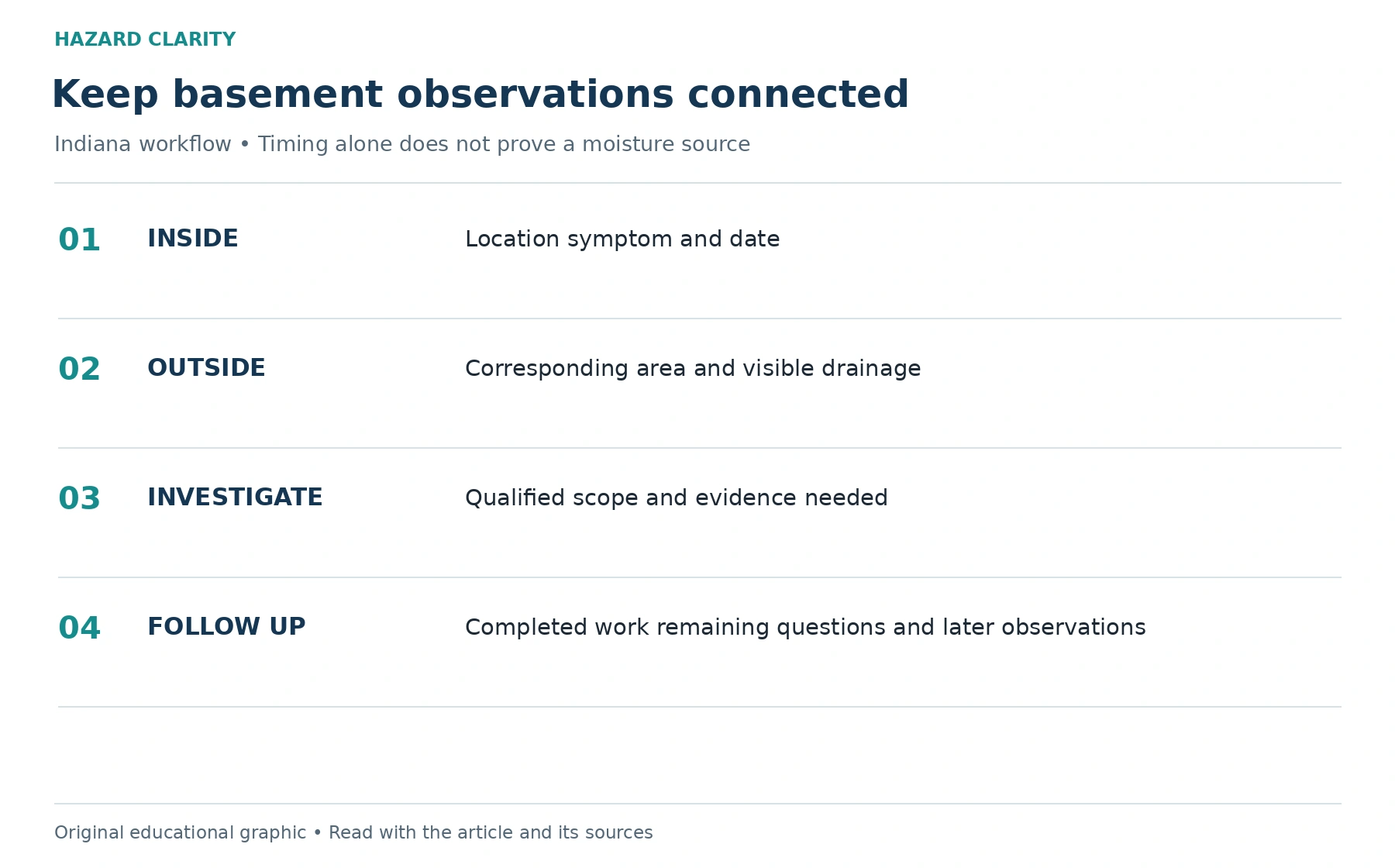
An Indiana basement can show moisture for more than one reason. A damp area noticed after leaves accumulate outside deserves attention, but the timing alone does not prove the source. A practical fall review connects exterior observations, interior symptoms, and service records so the right professional can investigate without starting from a guess.
This guide is for Indiana homeowners preparing for wetter or colder conditions and reviewing questions about water coverage. It focuses on the next steps after noticing a condition, rather than repeating definitions of flood, sewer backup, and groundwater. HC’s Indiana water pathways guide provides that background. Use the distinctions to ask clearer questions while keeping the cause open until the evidence supports an answer.
Establish what is new and what is known
Write down the first date you noticed the moisture and its exact location. Explain whether you saw standing water, a damp surface, staining, or another symptom. If there is an unusual odor, include that observation without assigning it a technical explanation. Different descriptions may lead a provider to different questions.
Look for earlier photographs, inspection reports, seller information, and repair invoices. A previous owner may have had work performed near the same area. Identify the scope of that work and whether the record includes a diagnosis, installation details, or only a payment. An invoice saying “basement repair” may leave important questions unanswered.
Do not erase the history by keeping only the latest document. Arrange records in date order so a provider can see what preceded the present condition. If the earlier issue was reported as resolved, keep the evidence of what was actually completed. A statement that work was finished is different from a later observation showing how the area performed.
Photograph the area before changing it
When conditions are safe, take an overall photograph of the affected space and closer images of the visible symptom. Include fixed landmarks so someone can identify the wall, corner, or floor area. Record dates in the notes and retain the original files where practical.
Avoid moving into water or near electrical equipment for a better photograph. Seek appropriate help when water, damaged equipment, unstable surfaces, or other hazards are present. The record should never take priority over getting people away from a potentially dangerous situation. Follow official emergency and electrical safety guidance.
If you move belongings to protect them under safe conditions, document where they were and what you observed. Keep purchase records and photographs for items that appear affected. Describe their condition accurately. Do not assume that every object in the room is damaged or that an insurer will use your initial estimate as the final assessment.
Compare the exterior and interior locations
Walk the outside from a safe position and find the area corresponding to the interior symptom. Note visible downspouts, basement windows, entries, nearby paved surfaces, and landscaping changes. An exterior observation can help guide an investigation without establishing a connection by itself.
For example, leaves near a drain and dampness inside may both deserve attention, but one photograph does not prove the leaves caused the dampness. Ask whether the visible drainage arrangement needs service and whether the interior condition needs a separate building or plumbing evaluation. A broad moisture question can involve more than one trade.
Keep a simple map showing the locations you are discussing. Mark observations and dates, not technical conclusions. HC’s Indiana drainage resource can help you organize site questions. Local infrastructure, property grading, and installed systems vary, so use the resource as a prompt rather than an explanation for your specific address.
Record the conditions around each observation
Note whether the symptom followed rain, appeared during dry weather, or coincided with plumbing use or a service interruption. If you did not observe the timing, say so. An honest gap in the log is more useful than an invented sequence that directs the investigation toward the wrong cause.
Track repeated observations using the same locations and descriptions. “Damp floor at the southeast storage-room corner, noticed the morning after rain” provides a starting point. Add whether the area had been dry in a previous observation, and record any work performed between the two. Do not use the log to delay necessary professional help.
Ask the provider whether other information would be useful. It may want service records, a discharge route, or details about a particular installed system. Share what you have and identify what is missing. This gives the professional a chance to define an appropriate evaluation instead of assuming your collection of photographs is sufficient.
Include the sump system without assuming it explains everything
If the home has a sump system, gather the model, installation information, service notes, and any alarm or backup records. Identify who normally maintains it and whether there were recent alerts, power interruptions, or changes. A pump present in the basement does not establish that every moisture condition is connected to it.
Ask a qualified provider to explain the system’s intended function and the scope of a maintenance visit. If the discharge arrangement is unclear, make that a separate question. Avoid experimenting with electrical components or unfamiliar controls. Service procedures should follow the equipment instructions and the qualified provider’s guidance.
Keep routine maintenance records separate from investigation of the new symptom. A completed pump service can answer one set of questions while wall moisture remains unresolved. Ask what further evaluation is appropriate rather than considering the whole basement task complete after the first service call. Identify who will receive any future alerts and arrange follow-up when needed.
Match the insurance inquiry to the evidence
Indiana’s flood insurance resource provides an official starting point for flood protection questions. It does not decide whether your basement condition meets a policy definition or whether a particular claim will be covered. Take the observed facts and actual policy documents to the licensed agent or insurer.
Ask which questions relate to homeowners coverage, which relate to a water backup endorsement, and which relate to a separate flood policy. Explain when the cause is not known. Ask what documentation or professional findings the company requires. Do not choose a convenient cause label simply because it appears more likely to fit coverage.
For a new or active loss, follow the policy’s reporting and protection requirements promptly and safely. Ask about approved emergency mitigation steps and retain receipts. A contractor can describe work and observations; the insurer addresses coverage under the contract. If you need consumer assistance, the Indiana Department of Insurance offers an official contact route.
Compare proposals by the problem they address
A moisture proposal should explain the observation or condition it intends to address, the location of work, and any limits to the evaluation. Ask whether the proposed work is based on a determined source or an assumption that needs testing. That distinction matters when deciding what to approve.
Two proposals with different approaches may not be competing answers to the same question. One might address exterior drainage while another concerns an interior system. Ask the providers to explain how their work relates to the findings. Avoid treating the largest scope as automatically the most thorough, or the cheapest scope as automatically sufficient.
Confirm who will provide completion records and how you should monitor the area afterward. Keep any warranty documents and conditions with the work file. A service warranty is not the same as a homeowners policy, and it may apply only to specific components or work. Read its actual scope before relying on it during a later discussion.
Keep humidity observations separate from a water diagnosis
A homeowner may also have indoor humidity readings or notes about a dehumidifier. Keep those records if they are relevant, but do not use them alone to decide where moisture originated. A reading describes a measurement at a particular place and time. Its significance for the building is a question for the appropriate professional.
Record the device and location if you share measurements. Explain whether doors, equipment, or household use changed between readings. Avoid presenting one favorable number as proof that an earlier condition has been permanently resolved.
Ask the evaluating provider whether monitoring would help and what information it would need. That can produce a focused follow-up plan rather than a collection of measurements no one has interpreted. Keep the plan alongside the investigation record, including when to contact the provider again. Monitoring should support the defined evaluation and response, while any hazardous or active water condition receives appropriate attention without delay.
Create a fall follow-up schedule
After the initial visit, list the remaining questions and the person responsible for each. One item may be a drainage evaluation, another an equipment appointment, and another a policy explanation. Give each a target date and note whether it depends on a previous result.
Use safe later observations to update the record. If the symptom returns, describe the date and location and tell the provider what work happened in between. A return visit should have access to the earlier evidence. Otherwise, the same condition may be evaluated repeatedly without anyone seeing the complete sequence.
For an Indiana household, the useful outcome is a basement file that links the observation to an investigation and a defined response. It can help you maintain the property and ask focused coverage questions. It should also preserve uncertainty where it remains. A clear record of what is known, what was done, and what still needs review is more useful than a confident explanation that the evidence does not support.
Sources and reference material
Indiana agencies Indiana flood insurance • Reviewed October 3 2026.
IDOI Consumer services • Reviewed October 3 2026.
See this property’s own hazard picture.
Check an address