On this page
- Identify the heating system before booking
- Bring the unresolved history to the appointment
- Describe the way the home is used
- Ask for a report that separates findings from work
- Keep alarm and heating checks connected
- Decide what belongs in an insurance conversation
- Separate maintenance costs from other agreements
- Plan for a loss of heat before travel
- Keep replacement planning separate from a repair decision
- Finish the appointment with a usable handoff
- Sources and reference material
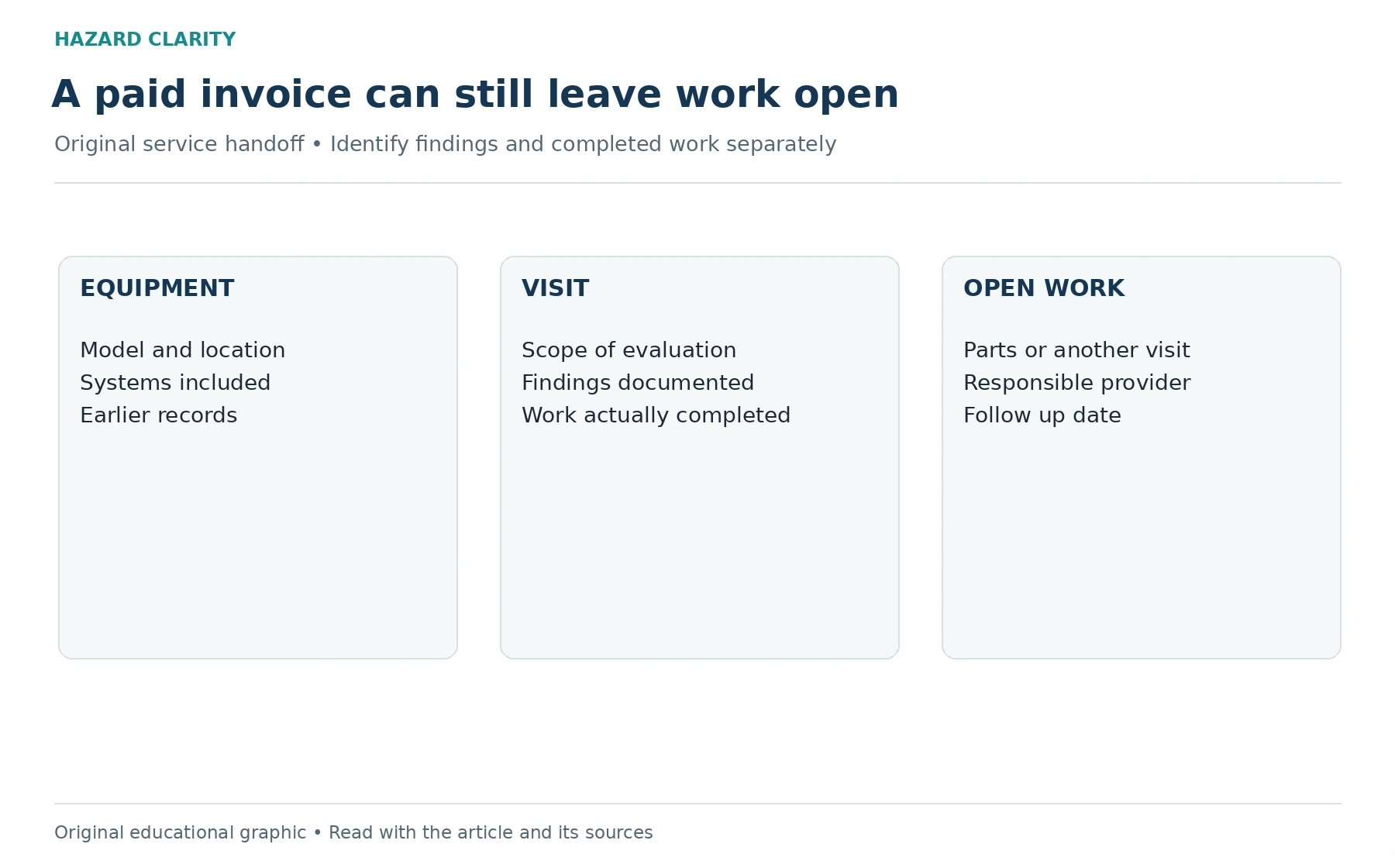
A furnace service visit is most useful when you leave with more than a receipt. You should know which equipment was evaluated, what the provider found, what work was completed, and whether anything still needs attention. Those details help you maintain the home and explain changes when an insurer asks about its systems.
Fall is a practical time to organize that work before heating becomes an everyday dependency. This guide focuses on the service record and follow-through. It does not provide instructions for opening, adjusting, or repairing a furnace. The appropriate procedure depends on the equipment and belongs with a qualified service professional.
Identify the heating system before booking
Gather the equipment information already available in the home. Look for installation records, manuals, earlier service reports, and the name of the provider who normally works on it. If a label can be read safely without opening unfamiliar components, record the manufacturer and model. Explain any uncertainty when booking.
A home may have more than one heating arrangement. An addition, finished lower level, or separate living area may use different equipment. Tell the provider about each system you expect the visit to cover. A service appointment for the main furnace does not automatically include a separate appliance in another part of the building.
Ask whether the company services your equipment and what the appointment includes. Clarify whether it is routine maintenance, evaluation of a reported problem, or both. Describe the issue in ordinary language instead of choosing a technical diagnosis. “The rear bedroom stayed cooler last season” gives the provider a starting point without implying that you know which component is responsible.
Bring the unresolved history to the appointment
Review last season’s notes before the provider arrives. Identify recurring concerns, earlier recommended work, and repairs for which you do not have a clear completion record. Share those documents in advance when possible. The new technician should not have to infer the history from one vague line on an old invoice.
If you recently bought the home, separate seller-provided information from your own observations. A statement that the equipment was “recently serviced” should lead you to request the dated report, not assume that every condition was evaluated. Installation, maintenance, and repair visits may establish different things.
HC’s report and inspection comparison explains why property data and physical system evaluation have different roles. A hazard report can provide location context, but it does not inspect a furnace. Keep that boundary clear when collecting evidence about the heating equipment you will rely on this winter.
Describe the way the home is used
Tell the provider about changes that may affect its understanding of the system. A formerly unfinished room may now be a bedroom. A work area may be occupied for longer hours. A room may have been renovated, or furniture may now sit near an opening or component. Describe the change and ask whether it warrants review.
Do not make ventilation or equipment adjustments based on a general article. Ask the provider what is appropriate for your arrangement and request instructions for any homeowner maintenance it recommends. If the recommendation is unclear, ask for a written explanation tied to the exact equipment rather than an informal suggestion you cannot repeat accurately.
Discuss the access needed for future visits. Ask whether stored items or household arrangements interfere with service access. You can often solve an organizational problem before the next appointment. Leave questions about required clearances and technical installation to the qualified professional and the manufacturer’s instructions.
Ask for a report that separates findings from work
A useful report identifies the equipment serviced and the date. It should make clear what was checked, any findings the provider is prepared to document, work completed, and recommendations still open. Ask the company how it communicates results before assuming that the paid invoice is the complete service record.
There is a difference between an observation, a recommended repair, and a completed repair. Keep all three visible. If a part was ordered, note the expected next appointment. If the provider recommends another trade, record the specific question for that provider. A recommendation does not become a completed task because it appears on a closed invoice.
Ask what the report does not establish. A routine visit may not answer every question about distribution, concealed components, installation history, or the building as a whole. That is not necessarily a problem with the service. It is a reason to match each unresolved question to an appropriate scope rather than treating one visit as a universal certification.
Keep alarm and heating checks connected
Use the month’s heating preparation to revisit the household alarm plan. Identify where device instructions are stored and whether testing or replacement follow-up remains open. A heating service visit does not automatically include alarm evaluation, and an alarm test does not inspect the heating appliance.
The USFA heating safety resource provides official guidance for household heating safety. Use it alongside appliance instructions and the provider’s advice. Ask a qualified professional about unfamiliar conditions or equipment arrangements. Avoid using a checklist to decide that a possible hazardous condition can wait until routine maintenance.
If an alarm sounds or there is a suspected immediate hazard, follow official emergency instructions and seek the appropriate response. Your service records can be shared afterward when safe. The purpose of a fall file is to support preparation and follow-up, not to replace urgent decisions by emergency personnel or qualified technical providers.
Decide what belongs in an insurance conversation
After a service visit or equipment change, ask your licensed agent or insurer whether the update should be reported. Identify the equipment, date, and work completed. Share the relevant record if requested. Do not assume that a replacement changes your policy or premium without confirmation.
If you are curious about equipment breakdown coverage, ask whether it is part of your policy or available as an endorsement. Request an explanation of the covered causes, exclusions, deductible, limits, and other conditions. A service problem and a covered equipment breakdown are not automatically the same thing. Keep the insurer’s answer with the actual policy documents.
HC’s insurance inspection guide can help you understand the questions a company may raise about a property. The report from your heating provider can be part of that discussion, while the insurer determines what documentation it accepts and how its contract applies.
Separate maintenance costs from other agreements
A furnace may have a manufacturer warranty, a contractor service agreement, or a home warranty contract in addition to homeowners insurance. Identify the agreement you are asking about before assuming there is a single route for payment. Each document may have its own eligibility conditions and service process.
Gather the contract, equipment details, and work record. Ask who must be contacted before additional work is authorized and whether a particular provider must be used. Do not infer that a regular contractor’s invoice will be reimbursed under a separate agreement. Follow the actual process rather than relying on an advertising summary.
When comparing a proposed service plan with paying for individual visits, consider the included work and exclusions. A plan described as “annual protection” may be a maintenance arrangement rather than coverage for all repairs. Ask what happens when a component fails, what remains the owner’s responsibility, and whether there are conditions tied to prior maintenance.
Plan for a loss of heat before travel
A service visit is a good time to ask what to do if the equipment stops working. Request the provider’s contact information and any appropriate homeowner instructions. Leave hazardous troubleshooting and repairs to qualified people. Identify an alternate provider if the regular company is unavailable.
For an upcoming trip, arrange who can receive alerts and access the property. Give that person a clear role, such as notifying you and contacting the service provider. Do not assume a friend is willing or able to repair equipment. Ask your insurer about relevant absence or heating conditions under the policy if those questions apply.
Keep the response plan with the service file and household contacts. A heating failure can involve a comfort problem, a plumbing concern, or another issue that needs prompt professional attention. The plan should help the household act without having to search for equipment information or decide who has permission to call for help.
Keep replacement planning separate from a repair decision
If the provider recommends considering replacement, ask for the reasons and the alternatives within its scope. Request a proposal that identifies equipment, installation work, and any additional changes. Keep that planning document separate from an urgent repair authorization so the household can review the decision with accurate information and appropriate professional input.
Finish the appointment with a usable handoff
Before considering the task complete, check that you have the report, invoices, open recommendations, and next appointment if one is needed. Put the equipment instructions in a location another household member can find. Set reminders for homeowner tasks only when you understand what the provider instructed.
A good handoff also explains the signs that should prompt another call. Ask the provider to distinguish routine maintenance from a condition requiring evaluation. Keep the wording it provides rather than translating it into a technical conclusion of your own. If an insurance question remains, send that separately with the relevant equipment record.
The goal is a heating system you manage with accurate information and qualified help. A fall service record will not guarantee an uninterrupted winter or a covered claim, but it can make future conversations much clearer. Know what was evaluated, follow through on recommendations, and keep the documents that explain the work actually performed.
Sources and reference material
USFA Heating fire safety • Reviewed October 3 2026.
See this property’s own hazard picture.
Check an address