On this page
- Describe the occupancy facts before choosing a label
- Map the ownership transition in one place
- Ask which provisions apply to the described period
- Keep construction and rental plans visible
- Build a maintenance plan separate from the policy answer
- Confirm the documents and payment path
- Update the plan when the dates change
- Use an illustrative move to test the workflow
- Sources and reference material
Closing day and move-in day are not always the same. A buyer may take ownership before furniture arrives, an owner may move out while a house remains for sale, or renovations may delay occupancy. Those transitions deserve a direct insurance conversation because the description of how a home is used can matter alongside its address, roof, and replacement value.
The practical question is not simply how many days a house can sit empty. You need to know how the actual policy defines the situation, which provisions apply, what the insurer needs to be told, and which coverage arrangement fits the planned use. A general internet answer cannot establish a universal grace period for every policy.
This guide helps buyers and homeowners build a transition timeline and a useful coverage file. It focuses on moving, delayed occupancy, temporary absence, and changes in use. The goal is accurate disclosure and confirmed documents before the situation changes, with a separate maintenance plan for the property while nobody is living there.
Describe the occupancy facts before choosing a label
Write down who owns the home, who is living there, when the current occupants leave, and when the next occupants expect to arrive. Include whether furnishings remain, utilities are operating, work is underway, and someone is responsible for checking the property. These details give the insurance professional a clearer account than saying the house will be empty for a while.
The National Association of Insurance Commissioners distinguishes furnished but unoccupied homes from vacant homes in its consumer guidance and directs owners to ask how their insurer defines vacancy. Use that distinction to prepare questions, while relying on the actual policy for the applicable definition and effect. A general educational description should not be treated as the contract wording for your home.
Do not assume that leaving a chair, arranging occasional visits, or scheduling a future move-in resolves the policy question. Tell the insurer the real circumstances and ask how it classifies them. If the classification depends on additional facts, request those questions in writing. Accurate information is more useful than arranging the property around an informal rule heard from someone else.
Map the ownership transition in one place
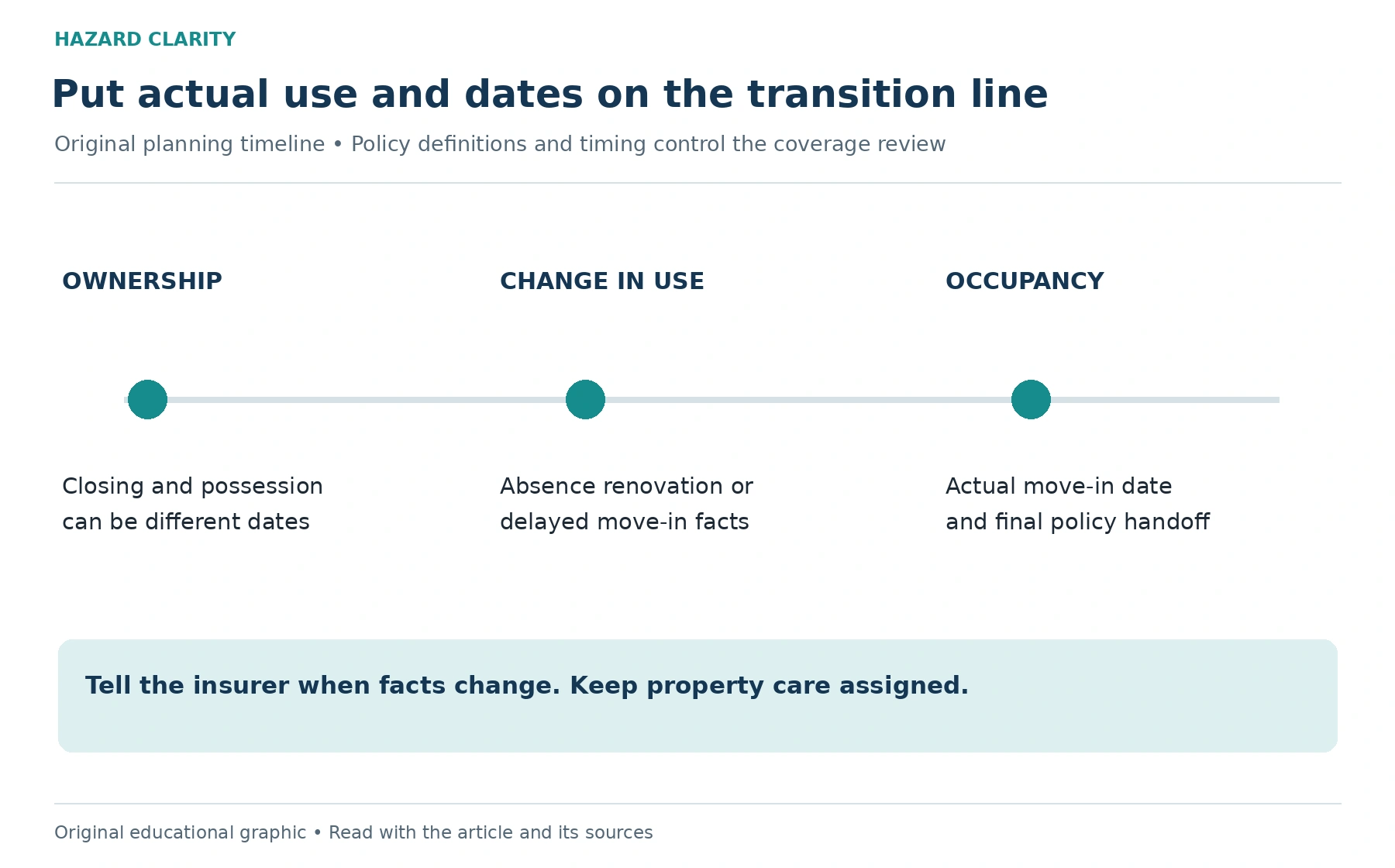
Create a short timeline showing the closing date, possession date, planned departure, expected move-in, and any renovation period. These dates can differ, so identify which event each one represents. If an agreement allows a seller to remain after closing or gives a buyer access before possession, ask the transaction professionals to explain the arrangement and its responsibilities.
Provide the timeline to the insurance professional before binding or changing coverage. Ask when the new arrangement should begin and which facts need to be confirmed before that date. HC’s homebuyers’ insurance timing guide offers a broader starting point, but the actual ownership and occupancy facts should drive this discussion.
Keep a separate line for the old home if you own two properties during the move. A policy change for the new address may not resolve the old home’s remaining coverage need. Ask about both properties, the transition of belongings, and the date any existing policy would end. Avoid canceling coverage simply because boxes have left when ownership and responsibility remain.
Ask which provisions apply to the described period
Request an explanation of any vacancy, unoccupancy, residence, renovation, or other use-related provisions relevant to your facts. Ask the professional to identify the actual forms or endorsements rather than give only a general assurance. The NAIC warns that vacant or unoccupied homes can leave owners exposed to losses or liability not covered by their homeowners policy.
Ask whether the insurer can accommodate the planned period under the proposed policy, whether an endorsement or a different policy is appropriate, and what documentation is needed. Also ask which coverage changes or exclusions would apply. You should understand the resulting protection rather than assuming any product labeled vacant-home insurance has identical terms.
Use specific scenarios to test your understanding without asking for a guaranteed claim outcome. For example, ask which provisions would be relevant to water damage discovered while the owner is away or damage during the stated renovation. The professional can identify the applicable terms and unanswered facts. Keep that explanation with the documents so the conversation remains tied to the actual proposal.
Keep construction and rental plans visible
If the home will undergo work before occupancy, explain the work, expected duration, contractor involvement, and whether the home will be habitable during the process. Ask which coverage arrangement is appropriate and what updates the insurer expects. A delayed move-in caused by painting may raise different facts from a major project that opens the structure or changes building systems.
If you may rent the home instead of living there, disclose that possibility before the change occurs. Ask the insurer what it needs to evaluate the intended use and which policy is appropriate. Do not assume that an owner-occupied policy automatically fits a long-term rental, a short-term rental, or another arrangement merely because the owner remains the same.
HC’s insurance questions before buying can help prepare a broader discussion. For this transition, keep the proposed use and timeline at the top of the file. An accurate application depends on describing the property as you intend to use it and updating the relevant professional when those facts change.
Build a maintenance plan separate from the policy answer
Identify who will check the property, how they will gain authorized access, and how they will contact you if something changes. Ask the insurer whether the coverage arrangement has specific inspection, heating, security, or other conditions. Keep those instructions separate from a general owner checklist so you can tell which tasks come from the policy and which you chose for practical maintenance.
Discuss heating, plumbing, and other building-system questions with qualified providers using the property’s actual equipment and circumstances. Do not choose a universal thermostat setting or shutdown procedure from a generic vacancy article. Ask for appropriate instructions and document who will carry them out, especially when the owner will be far away during the transition.
Retain check-in records in a simple form: date, person, authorized observations, and any action taken. These records support continuity and communication, but they do not change policy definitions or guarantee coverage. If a problem is observed, follow the applicable response instructions promptly rather than waiting for the next planned visit or assuming an automated alert will resolve it.
Confirm the documents and payment path
Before treating the coverage task as complete, obtain the relevant confirmation, identify the property, and verify effective dates and the arrangement provided. Ask whether further underwriting information or work remains outstanding. A quote, application, binder, and issued policy can represent different stages. The useful question is what protection is confirmed now and what still needs to happen.
Check who receives notices and how payments will be made during the move. A mailing address change, shared responsibility, or escrow arrangement can create confusion if nobody owns the follow-up task. Ask the insurance professional and lender where appropriate to confirm their respective processes. Keep copies of payment and coverage correspondence in the transition file.
Do not rely on a contractor, caretaker, or real estate contact to confirm your insurance unless that person is acting within an appropriate authorized role. Their useful contributions are facts about work, occupancy, access, or the transaction. The coverage answer should come through the insurer or insurance professional and the actual documents, leaving each participant’s responsibility clear.
Update the plan when the dates change
A renovation can take longer than expected, a closing can move, or a tenant can arrive later. When the facts change, contact the relevant insurance professional rather than assuming the original approval applies to the new period. Explain the revised dates and use, then ask whether the coverage arrangement or required documentation needs to change.
Retain the update and response with the earlier timeline. This makes it possible to understand what the insurer was told and which arrangement applied at each stage. If no response has arrived, keep the item open and follow up through the appropriate channel. An unanswered email is not confirmation that the new facts are acceptable under the policy.
The same practice applies when occupancy begins. Tell the insurer when the planned situation becomes the actual situation and ask how any temporary arrangement should end or convert. Obtain the resulting documents and dates before assuming the ongoing homeowners coverage is in place. Finish the transition with a confirmed handoff, not simply a calendar reminder marked done.
Use an illustrative move to test the workflow
Imagine a buyer closing on a house several weeks before a planned move-in while contractors complete work. The buyer creates a timeline showing ownership, the work period, furnishing delivery, and expected occupancy. The insurer receives those facts and identifies the appropriate arrangement and any conditions. The buyer separately assigns property checks and retains the contractor’s scope.
If the work takes longer, the buyer sends the revised timeline and requests confirmation of any coverage changes. When occupancy begins, the buyer completes the insurance handoff and keeps the final documents. This example does not establish a permitted number of empty days. It shows how a changing situation can remain accurately described throughout the transition.
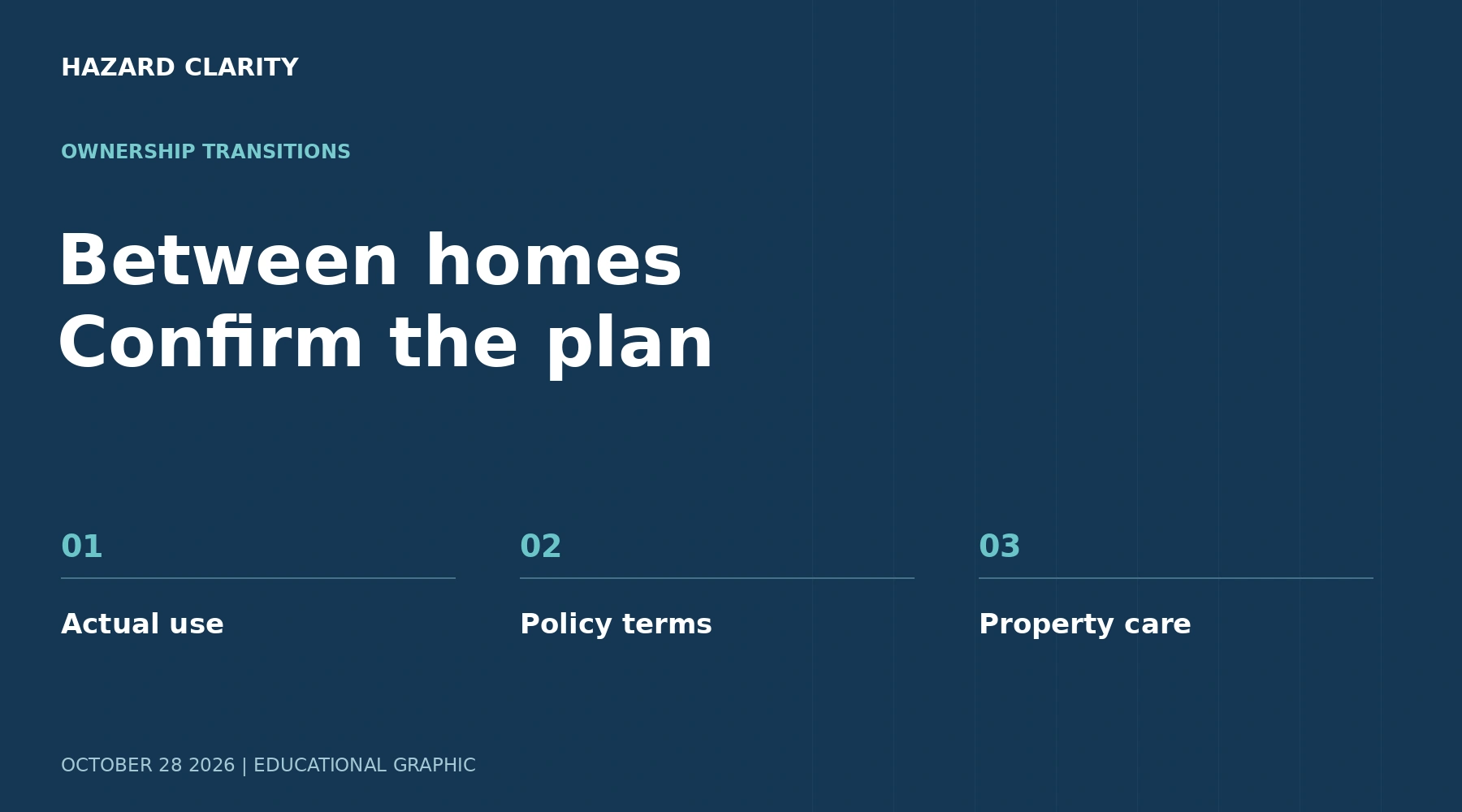
A useful empty-home plan has three parts: the actual use and dates, confirmed insurance documents, and an assigned property-care routine. Keep them connected without treating one as proof of the others. That structure helps you manage the period between homes and gives the insurer the facts needed to address your property’s circumstances.
Sources and reference material
NAIC Leaving Home: Insurance Considerations for a Move • Moving and vacant/unoccupied property background; older guidance, no pricing or deadlines imported. Reviewed October 3 2026.
NAIC Military Service Members and Families • General distinction and direction to confirm insurer definitions; no military-specific requirements imported. Reviewed October 3 2026.
See this property’s own hazard picture.
Check an address