On this page
- Plan the meal around the equipment you have
- Resolve appliance concerns before the gathering
- Prepare counters for work rather than display
- Review portable appliances and their intended use
- Make refrigerator space part of the schedule
- Separate guest traffic from the cook’s workspace
- Assign preparation tasks with a clear finish
- Revisit alarm and escape information before the crowd
- Ask insurance questions before they become urgent
- Use a short day before preparation checklist
- Sources and reference material
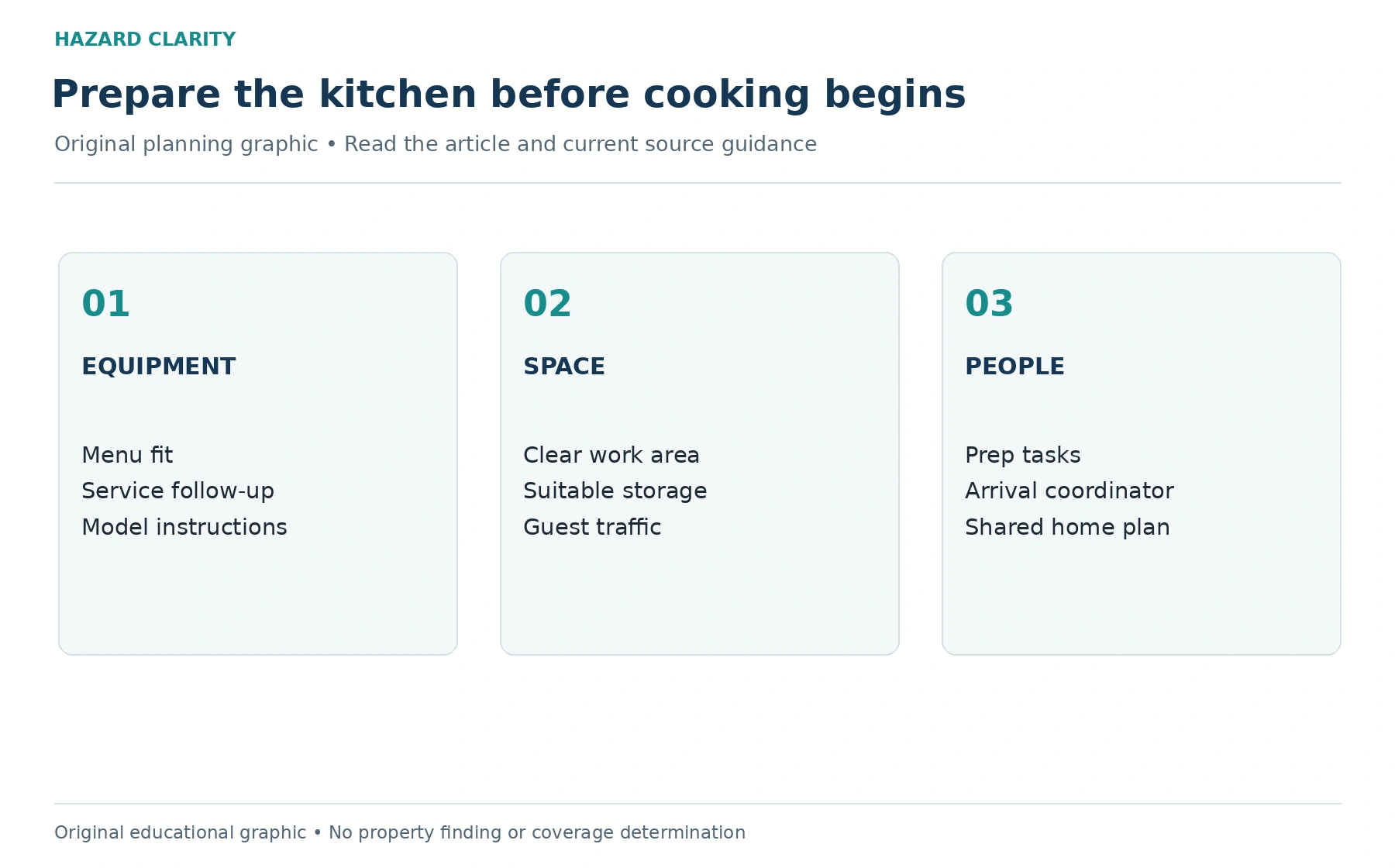
Thanksgiving kitchen preparation starts before the first burner turns on. Make sure the equipment, space, and household plan support the meal you intend to cook. A crowded counter, an unresolved appliance problem, or too many last-minute jobs can make an ambitious menu harder to manage. A smaller, workable plan is often the better hosting decision.
This is a preparation guide for the days before Thanksgiving. It focuses on appliance readiness, workspace, storage, guest traffic, and assigning tasks. Active cooking attention and fire response deserve their own instructions from official sources; HC’s November 24 article will address that stage. Today’s job is to make the kitchen ready for the people and equipment that will use it.
Plan the meal around the equipment you have
List the dishes you intend to prepare and which appliances they require. Identify conflicts before shopping: two dishes needing the same oven at different conditions, several small appliances needing space, or a refrigerator already filled with groceries. The planning question is whether the actual kitchen can support the menu without rushed improvisation.
Use each appliance’s instructions for intended operation and capacity. If you are unsure how a setting works, review the documentation before the holiday. Do not make Thanksgiving the first occasion you attempt an unfamiliar feature while guests and other dishes compete for attention. A known method can reduce the number of decisions needed later.
Choose a realistic alternative for any dish that depends on uncertain equipment. Ask a guest to bring it, use a suitable prepared option, or change the menu. Those are ordinary planning choices. The meal does not need to depend on an appliance that is awaiting service simply because the shopping list was written first.
Resolve appliance concerns before the gathering
Look at the equipment you expect to rely on and review any previous service recommendations. If a device has an unresolved condition, ask the qualified provider what evaluation or work is appropriate before use. Follow the provider and manufacturer instructions; this article does not provide appliance repair steps.
Keep the model, symptom, and earlier report ready when requesting service. Describe what happened without choosing a technical cause. An oven that did not operate as expected or a dishwasher with recurring water nearby needs a specific conversation. A general request to check everything can leave the provider unclear about your concern.
Ask what the appointment includes and what remains afterward. If a part is ordered or another visit is recommended, keep that task open. HC’s insurance inspection explainer helps distinguish a company’s property review from appliance evaluation. Neither should be treated as a substitute for the other.
Prepare counters for work rather than display
Choose clear areas for preparation, cooling or staging where appropriate, and serving. Decide where decorations, mail, reusable bags, and other everyday items will go before the meal. The useful question is whether the cook can reach needed items without moving unrelated belongings while handling food or equipment.
The USFA cooking resource emphasizes keeping combustible items away from the stovetop. Use that guidance in advance when deciding where towels, packaging, and decorative pieces belong. This preparation step creates a workable space before active cooking requires attention.
Avoid making the stove or an appliance surface a temporary storage solution. Use the equipment instructions and suitable work areas. If the kitchen is small, move part of the serving arrangement elsewhere rather than trying to fit every holiday object beside the cooking area. The best layout is the one the household can maintain during a busy day.
Review portable appliances and their intended use
If you plan to use warmers, mixers, slow cookers, or other portable equipment, gather the instructions and inspect the items as directed by the manufacturer. Address visible damage or an unfamiliar condition through the appropriate provider. Do not assume a device is ready because it worked during last year’s gathering.
Think through where each appliance will sit and how it will be used. Keep the arrangement consistent with its intended environment and instructions. If the plan depends on improvised electrical connections, ask a qualified professional about a suitable solution instead of adding cords until everything reaches.
HC’s wiring and insurance guide can help organize documentation questions when the home has an existing electrical concern. A new appliance plan should not hide that unresolved condition. Get the appropriate evaluation before relying on the arrangement for a holiday meal.
Make refrigerator space part of the schedule
Review what must be stored before and after the meal. Clear suitable space according to the appliance instructions and current food-safety guidance. Identify containers and a practical plan for leftovers before the refrigerator is full. A storage decision made calmly in advance is easier than reorganizing everything when guests are leaving.
For turkey preparation, use the USDA’s Thanksgiving resource. Its guidance says refrigerator thawing requires roughly 24 hours for every four to five pounds. Plan against the actual turkey and current instructions rather than assuming that an overnight stay in the refrigerator will be enough.
Keep food handling questions with USDA’s official instructions, including its guidance for cooking and storage. This article is primarily a kitchen and household preparation plan. If a timing or method is uncertain, check the relevant official resource before choosing a shortcut to keep the menu on schedule.
Separate guest traffic from the cook’s workspace
Think about where visitors will gather, place coats, get drinks, and bring dishes. If every route crosses the cooking area, move a service station or arrival task to another suitable location. You do not need a large home to make the traffic plan more intentional. A clear place for drinks can reduce trips through a narrow workspace.
Discuss the arrangement with the other adults hosting. Decide who welcomes guests and where incoming dishes should go. A guest who arrives with something needing reheating should have a clear contact person. This keeps the cook from making every scheduling and space decision while already managing the meal.
USFA’s cooking pictographs include a three-foot safety zone around stoves and grills. Use that official guidance when planning the space for children and pets. Decide how household adults will support the arrangement rather than relying on every visitor to infer it from the furniture.
Assign preparation tasks with a clear finish
Divide work by result: clear the serving table, confirm the appliance appointment, prepare containers, or set up the guest arrival area. Ask each person to agree to the task and know when it should be finished. A vague request to help in the kitchen can create overlap while a necessary job remains undone.
Keep the cook’s active role distinct from jobs that can be completed earlier. Shopping, cleaning an appropriate workspace, locating instructions, and arranging dishes can often happen before the busiest period. Plan those tasks now so they do not compete with cooking attention on the day itself.
If someone brings equipment or food needing special handling, ask for the relevant instructions in advance. Do not assume the host understands an unfamiliar appliance or storage requirement. A quick conversation before the gathering can prevent a last-minute decision about a device or dish that does not fit the available space.
Revisit alarm and escape information before the crowd
Keep the home’s alarm instructions and maintenance record accessible. Follow the actual model’s test and replacement guidance, and address any open follow-up through the appropriate route. Do not alter an alarm arrangement to make cooking more convenient. Equipment and household safety questions deserve attention before the meal begins.
Use the USFA home fire escape guidance to review the household plan. Think about visitors unfamiliar with the layout and any people who may need assistance. Keep exits and routes usable according to the actual home arrangement and official guidance.
Make essential information easy for another adult to find. The cook should not be the only person who knows the appropriate emergency contact route or where visitors are gathering. This is a preparation conversation, not a requirement to give every guest a lengthy briefing at the door.
Ask insurance questions before they become urgent
If you want to understand fire damage, belongings, or temporary accommodation terms, ask the licensed agent using your actual policy. Explain the concern and request the relevant limits, exclusions, and conditions. A kitchen preparation checklist cannot determine whether a particular loss would be covered.
The NAIC event insurance discussion is a starting point for hosting-related questions. Use it to prepare a focused conversation, while the company addresses your contract. Do not treat a discussion or quote as a confirmed change in protection; ask how any actual policy action becomes effective.
Keep policy and claim contact information accessible outside the kitchen. That record belongs alongside the household plan, but the immediate response to an emergency should follow official instructions. Insurance documentation is useful when safe and appropriate after the necessary response is underway.
Use a short day before preparation checklist
Before Thanksgiving, confirm the menu fits the available equipment, unresolved service work has an answer, counters and serving areas are ready, storage is planned, and household adults understand their preparation tasks. Check any changed guest needs or incoming dishes. Mark a task complete only when the result exists.
If something remains uncertain, simplify the plan. A dish can change; the gathering can use a different serving arrangement; a guest can help with an agreed job. Those are sensible adjustments when they make the kitchen manageable. You do not need to preserve an ambitious plan at the expense of an unresolved equipment question.
Save the preparation checklist and use it as the starting point for the active cooking plan closer to the holiday. Today’s work is complete when the space, equipment questions, and household roles are ready. That leaves the cooking day with fewer competing decisions and gives the people preparing the meal room to focus on what they are doing.
Sources and reference material
USFA Cooking fire safety • Reviewed October 3 2026.
USDA FSIS Happy Thanksgiving • Reviewed October 3 2026.
USFA Cooking pictographs • Reviewed October 3 2026.
USFA Escape plans • Reviewed October 3 2026.
NAIC Event insurance • Reviewed October 3 2026.
See this property’s own hazard picture.
Check an address