On this page
- Start with the systems beyond the occupied rooms
- Schedule the work before relying on a forecast
- Ask who controls the relevant water supply
- Connect the freeze plan to continued heat
- Read the Texas insurance distinctions carefully
- Ask about duties before an absence
- Keep completed work visible
- Prepare a response file without rehearsing repairs
- Use current information when the forecast changes
- Review the plan when conditions or use change
- Sources and reference material
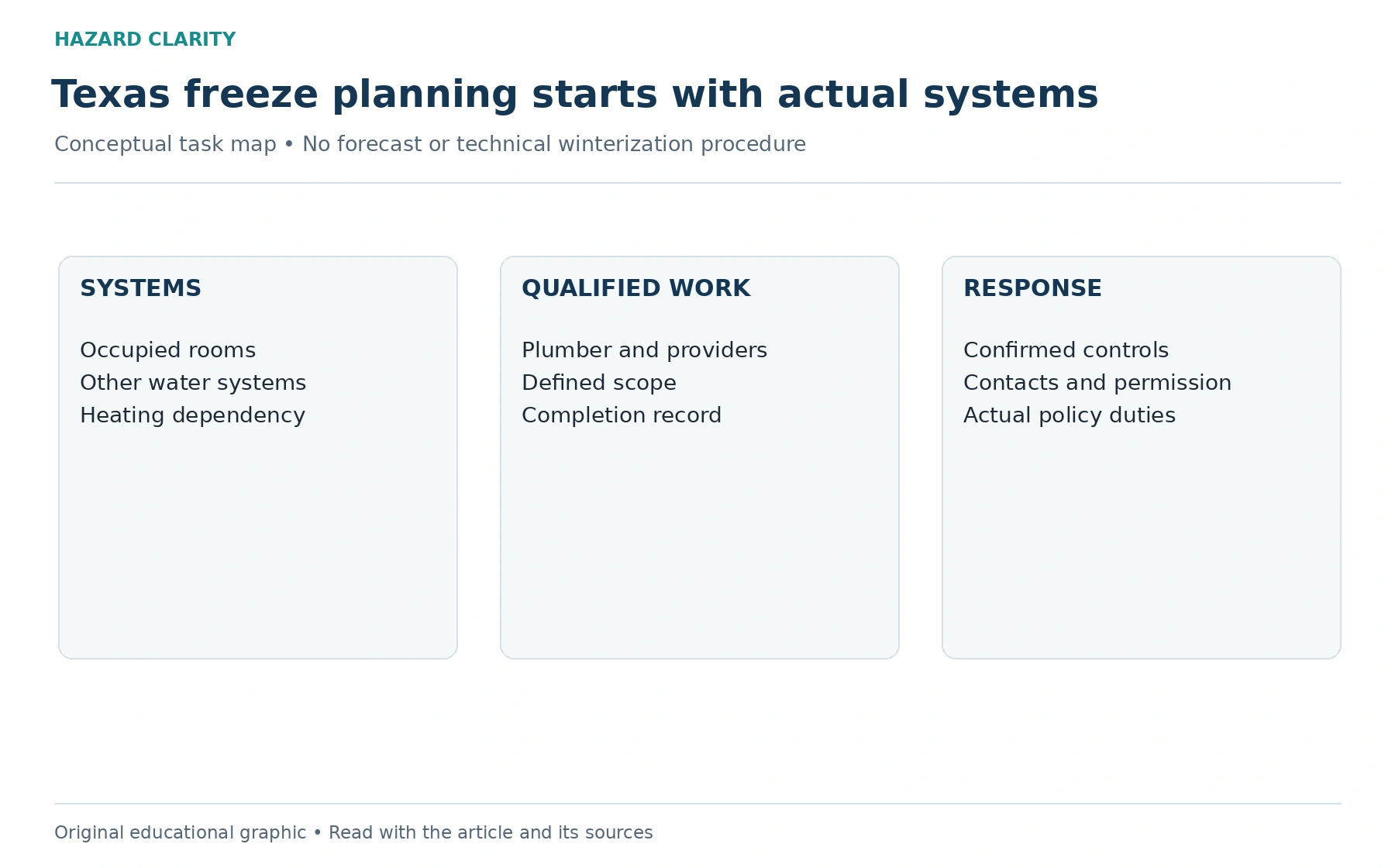
Texas freeze preparation deserves its own home plan. A checklist borrowed from another state may overlook the plumbing routes, outdoor systems, and service arrangements at your address. The useful question is not whether every Texas home faces the same conditions. It is whether you understand the systems you own and have completed the appropriate work before a cold-weather concern becomes urgent.
This guide uses Texas Department of Insurance resources to organize homeowner questions, then connects those questions to professional evaluation and policy review. It is not a forecast or a promise that a particular winter event will occur. Use current official alerts for weather information and qualified providers for the home’s actual equipment.
Start with the systems beyond the occupied rooms
List the plumbing and water-using equipment that serves the property. Include attached or detached spaces, exterior connections, and specialized systems when present. Identify what you know from installation records and what remains uncertain. The list should lead to professional questions, not improvised shutdown procedures.
Texas Department of Insurance’s freeze preparation resource highlights plumbing preparation, including concerns about attic pipes. Ask a qualified plumber whether that or another exposure applies to your home. Do not enter an unsafe attic or assume every Texas property has the same plumbing route.
If you recently purchased the property, ask for earlier service records and any winter-related repairs. Locate the scope and date of the work. A seller’s assurance or a repair invoice can provide context, but neither necessarily establishes that the current system has been fully reviewed for freeze preparation.
Schedule the work before relying on a forecast
Ask the plumbing provider what preparation is appropriate for each system. A proposal should identify the areas included, what work will be performed, and any arrangements that require another provider. Irrigation or specialized equipment may need its own service contact and instructions.
Clarify what will remain operational after the visit. If a system is taken out of service, ask for a written explanation and any instructions about restoring it. Store those instructions where another household member can find them. A task labeled “winterized” is incomplete as a handoff if no one knows what was changed.
Choose a target date based on provider advice and household plans, not on an assumed statewide deadline. Availability can vary, and different homes need different work. Booking the evaluation early gives you time to address recommendations without using an urgent weather alert as the first prompt to understand the system.
Ask who controls the relevant water supply
During an appropriate visit, have a plumber identify the main shutoff and explain its use. Confirm which control applies to the home and which systems have separate arrangements. Do not assume a visible valve is the correct one or that it operates as intended.
Record the location with a clear description and, when safe, a photograph. Ask what to do if a control is inaccessible or appears to need service. Keep qualified instructions with the record. A simple label should reflect confirmed information, rather than a guess by someone who recently moved in.
Include the water service provider’s contact route. A public supply issue and a building plumbing issue may require different assistance. The person helping at the home should know whom to call for each question and what work is outside their role. Clear contacts reduce the need for improvised decisions during an interruption.
Connect the freeze plan to continued heat
Identify the heating equipment and any open maintenance recommendations. Tell the heating provider how the home is used and whether you expect to travel. Ask about the appropriate response if the system stops working. Do not assume a routine appointment answers every question about heating interruption and plumbing exposure.
Arrange alerts or check-ins only when there is a real response plan behind them. Decide who receives the message, who can enter the property, and who can authorize a service visit. Ask the helper to confirm the role. A phone notification to an unavailable person can leave the underlying concern unresolved.
Use current official guidance and qualified advice for any backup heating arrangement. Avoid solving a freeze concern with unsafe equipment use. The plan should identify appropriate professional assistance and household actions, while leaving hazardous troubleshooting and technical installation to qualified people.
Read the Texas insurance distinctions carefully
The Texas Department of Insurance winter guidance distinguishes burst-pipe concerns from flood insurance questions. That is important because “water damage” is too broad a label for a precise policy conversation. Ask about the observed or anticipated mechanism and the contract that would apply.
If the concern is freezing and a burst pipe, ask your licensed agent or insurer about the homeowners policy’s relevant conditions. If the concern is outside floodwater, ask about flood coverage separately. Do not assume a separate flood policy will answer every water question or that homeowners coverage removes the need to consider flood exposure.
HC’s flood coverage guide provides background for that distinction. Bring the actual declarations, endorsements, and policy wording to the insurer discussion. A general resource is useful for choosing questions, while the company must explain how its terms apply to your circumstances.
Ask about duties before an absence
Explain whether the home will remain occupied, be temporarily unattended, or undergo another change in use. Ask what policy duties or conditions are relevant to the actual arrangement. Avoid relying on a generic temperature recommendation as proof that every contractual requirement has been satisfied.
Request a clear explanation of any maintenance, heat, or reporting expectations the company identifies. If the answer refers to a policy section, keep that section with the response. Record the date and the person or company providing the information. If the answer is unclear, ask for clarification before making a coverage assumption.
A short trip and a long transition between occupants are different planning situations. Keep the dates and arrangements accurate. The insurer should be responding to the home’s real use, rather than an abbreviated description that leaves out important facts. A friend checking the property does not automatically change its contractual status.
Keep completed work visible
After preparation, collect the service report and invoice. Identify which areas were included, what was changed, and whether anything remains open. Ask for model-specific homeowner instructions when appropriate. If another visit is recommended, set the next step before filing the first invoice away.
For substantial modifications, keep the supporting installation and approval records the provider supplies. Ask whether local requirements apply before work begins. Do not assume that a neighbor’s arrangement establishes the requirements for your property. Technical scope and local rules need to be verified for the actual project.
HC’s Texas seasonal readiness resource can organize the broader list. Keep the plumbing file linked to heating, access, and travel planning. This makes it easier for another household member to understand why a particular service task matters and where the instructions are stored.
Prepare a response file without rehearsing repairs
Keep the plumber, heating provider, utility, and insurer contacts together. Add equipment identifiers and the dates of recent work. Make a secure copy available if you cannot access the home. The response file should help you find qualified assistance and share accurate information.
If a concern occurs, describe what you actually observed and follow current official safety guidance. Do not enter a dangerous area for photographs or attempt unfamiliar electrical or plumbing work. For a potential loss, contact the insurer through the appropriate route and ask what documentation and safe protection steps it requires.
Preserve the distinction between the repair process and coverage review. A contractor may identify a condition and propose work. The insurer may request evidence and explain policy terms. Keep both records, and avoid treating either provider’s answer as a substitute for the other’s responsibility.
Use current information when the forecast changes
When an official cold-weather alert is issued, review the completed preparation and open tasks. Identify whether any provider instructions depend on current conditions. Contact the appropriate company when you need clarification, rather than improvising a new procedure based on social media advice.
Keep local utility notices distinct from general weather information. A service interruption notice may have a different geographic area, timing, or contact route. Save the source and check whether it applies to your address. Do not assume a notice from another Texas city describes your own service.
Share practical updates with the household member or helper responsible for the property. Explain what has changed, which tasks remain open, and whom to contact. This is an update to an existing plan, not the first time anyone should be learning where equipment is located. Qualified preparation completed earlier gives you a better basis for the questions that arise when conditions become more immediate.
Review the plan when conditions or use change
Revisit the plan after a renovation, equipment replacement, or change in travel arrangements. A document prepared for last year’s systems may not match the present home. Update the contacts and open tasks rather than assuming the older file remains complete.
For example, a new outdoor water system might require separate preparation, while an addition might raise questions about heating and plumbing routes. Bring those changes to the relevant provider and ask whether the insurer needs updated information. Treat the work and the policy inquiry as defined tasks with their own completion records.
Texas freeze preparation works best as an address-specific routine. Identify the equipment, arrange qualified work, and ask precise questions about the contract you hold. Then keep a response plan that someone can use if you are away. You do not need certainty about the coming winter to make the next service appointment or resolve an unanswered question about your home.
Sources and reference material
TDI Winter safety • Reviewed October 3 2026.
TDI Avoid frozen pipes • Reviewed October 3 2026.
See this property’s own hazard picture.
Check an address