On this page
- Start with the problem you want to notice
- Distinguish detection from automatic action
- Ask placement questions that match the device
- Understand the power and connection requirements
- Test the alert route using approved instructions
- Give every alert a response owner
- Preserve observations without inventing a cause
- Ask insurers about specific program requirements
- Keep coverage questions separate from device features
- Finish with a monitoring record you can maintain
- Sources and reference material
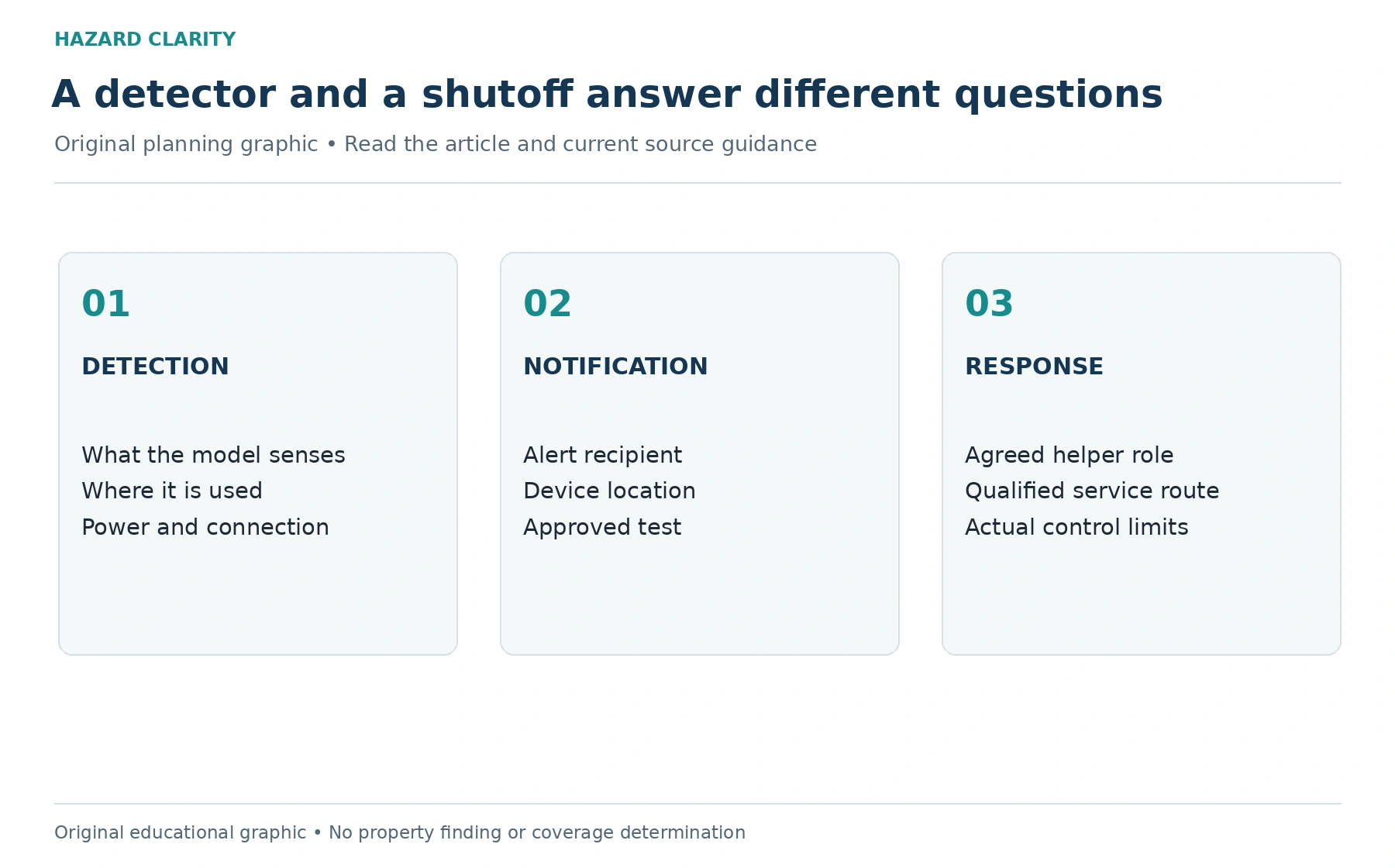
A water alert is useful only when someone knows what it means and what to do next. Smart leak sensors can support a home maintenance plan, but they should be evaluated as specific devices with specific limits. Before buying or installing anything, decide where you want information, how alerts will reach you, and who can respond when you are away.
This guide explains the questions behind a useful sensor plan. It does not recommend a brand, diagnose plumbing, or promise an insurance discount. A sensor, a monitoring service, and an automatic shutoff system may do different things. The product’s instructions, qualified installation advice, and your insurer’s actual program terms should control those decisions.
Start with the problem you want to notice
Identify the area or event you want to monitor. Perhaps you want to know when water reaches the floor near a washing machine, or you want a provider to explain monitoring options for the home’s supply line. Those are different goals. Write down the question before comparing features so the device choice follows the home need.
Gather existing plumbing information and service records. A recurring leak deserves evaluation even if you add monitoring. Tell the plumber where moisture has appeared, what was repaired, and what remains uncertain. Monitoring can contribute information, but it should not become the reason to postpone investigation of an active condition.
HC’s plumbing and insurance guide can help organize questions about system records. Use it alongside qualified findings. Pipe age, a prior invoice, or a sensor reading alone does not establish the cause or condition of every component in the home.
Distinguish detection from automatic action
Some products notify you when a sensing element encounters water. Other systems monitor different information or can control a valve. Ask what the exact model detects, which areas it serves, and whether it only sends an alert or also performs an action. Avoid interpreting the word smart as a complete description.
For an automatic shutoff arrangement, ask a qualified provider which supply it controls and which uses it does not address. The home may have more than one water arrangement or special equipment. Understand normal operation, limitations, and the appropriate route for service before relying on it during travel.
Keep installation and operating requirements with the model record. A small floor sensor and a device installed into plumbing can involve very different work. This article does not provide a valve-installation procedure. If the arrangement affects the home’s water system, get suitable professional advice for that installed configuration.
Ask placement questions that match the device
Follow the manufacturer’s instructions for suitable locations and use. Ask the provider where a device would help answer your particular monitoring question. A sensor placed where water is unlikely to reach it may not supply the information you expected, while a device used outside its intended environment may create another problem.
Think about access for inspection, testing, and maintenance. A device concealed behind stored items may be difficult to check or replace. If a location is unsafe or requires moving heavy equipment, discuss an appropriate arrangement with the provider. The goal is a maintainable monitoring plan, not a photograph of a device beside every appliance.
Document the chosen locations with names another person will understand. Include the device identifier where practical. If you receive an alert from sensor three, you should be able to determine which area it refers to without searching the whole home. Location naming is an ordinary organizational step with real value during a response.
Understand the power and connection requirements
Ask how the device receives power and how it communicates. Does it depend on a battery, household electricity, a hub, a wireless network, or a service account? Use the actual documentation to identify these dependencies. Different models can behave differently when a connection or power source is unavailable.
Write down how a low battery, disconnected device, or service interruption is reported. A silence in your app may not establish that every sensor is operating. Ask which status information is available and what routine checks the manufacturer recommends. Keep those checks within the intended instructions rather than inventing a testing method.
If you are considering the system partly for outage protection, discuss that purpose directly. Ask what continues to operate and what does not. A backup battery in one component does not tell you whether the whole alert route remains available. Device, network, and notification service requirements should each be understood.
Test the alert route using approved instructions
Use the manufacturer’s specified test process to confirm the path from the device to the intended recipient. Do not create a leak or flood an area to see whether the device reacts. The provider can explain an appropriate demonstration when the arrangement is unfamiliar or includes automatic controls.
Check more than the sound or message on your own phone. Can another agreed recipient receive the information? Does the notification identify the location? Are relevant settings enabled? Keep the test date, observed result, and any follow-up in the device record. A successful setup demonstration should lead to the routine checks recommended for the model.
Review the plan after replacing a phone, changing internet service, moving a device, or revising account access. Those changes can alter the notification arrangement without changing the plumbing. Make device upkeep part of the home’s maintenance routine instead of assuming the first installation permanently settles the communication question.
Give every alert a response owner
Decide who receives the first notification, who checks the situation when safe, and who can contact qualified assistance. If you are often away, ask a nearby helper whether they can actually respond. Receiving a message and being able to enter the home are different capabilities.
Provide the helper with the relevant provider contact and agreed access instructions. Define the role clearly: notify you, arrange entry for a plumber with permission, or report what is visibly observed from a safe position. Do not assume that a friend is willing or able to operate equipment or perform repairs.
Add an alternate contact for dates when the main person is unavailable. Keep the plan proportionate to the household and the device’s purpose. A simple alert route that people understand can be more useful than a complicated list of recipients who each believe someone else is handling the message.
Preserve observations without inventing a cause
If an alert occurs, record the time, location, and what was observed when it was safe to check. Keep relevant device information and photographs where useful. An alert can indicate that the sensing condition occurred, but it may not establish where the water came from or when the underlying problem began.
Share the observation with a qualified provider. Explain earlier work or alerts in the same area. A wet floor near an appliance could need investigation; choosing the nearest component as the cause would be an assumption. The provider’s findings should remain separate from your initial notes.
If water, electricity, unstable surfaces, or another immediate hazard is present, seek the appropriate response and stay out of the dangerous area. Documentation can follow when safe. Monitoring should help the household reach assistance, not encourage someone to investigate an unsafe condition to complete an app notification.
Ask insurers about specific program requirements
If you want to know whether a device affects insurance, ask the licensed agent or company before assuming a benefit. Identify the exact model, features, installation arrangement, and monitoring service. Ask whether any applicable program requires professional installation, a particular function, ongoing service, or proof that the system is active.
The Texas Department of Insurance discount resource illustrates the value of asking a company about smart-home programs. That is not a nationwide promise or evidence that your leak sensor qualifies. Availability, requirements, and any effect on premium need confirmation for the actual policy.
Keep the company’s answer with the device records. If a program is offered, ask how eligibility is documented and what updates are needed if equipment or service changes. A product advertisement mentioning insurance savings is not the same as a confirmed benefit on your policy.
Keep coverage questions separate from device features
A detector does not make every water event insured. Ask how the policy addresses the actual mechanism and circumstances of a loss. HC’s flood insurance explainer can help distinguish flooding from other water questions, but the insurer must explain the relevant contract terms.
If damage occurs, follow the company’s reporting and protection instructions promptly and safely. Ask which device logs, photographs, professional findings, and receipts it needs. Preserve the original records where practical. Do not alter an observation to fit a cause you think is more likely to qualify for payment.
The sensor plan and insurance file can support each other while retaining separate purposes. One helps you detect and respond to a condition. The other explains the coverage agreement and reporting process. Neither should be treated as a substitute for repairing a known plumbing problem.
Finish with a monitoring record you can maintain
Create one entry for each device or system: model, location, operating instructions, power and connection requirements, alert recipients, service contact, and the next recommended check. Record any limits you learned during setup. That information is useful when another household member takes over the task or a provider returns for service.
Consider whether the plan still fits after a renovation, new appliance, or change in travel routine. A device may need a revised location or a different response owner. Bring technical changes to the appropriate provider rather than moving equipment based on a general article.
Start with the monitoring question, confirm the product’s actual capabilities, and make the response route workable. A thoughtful leak sensor plan is a home-management tool. Its value comes from useful information reaching someone who understands the next step, supported by maintained equipment and qualified help when a problem needs evaluation.
Sources and reference material
Texas Department of Insurance Ask about discounts • Reviewed October 3 2026.
See this property’s own hazard picture.
Check an address