On this page
- Gather the plumbing history before the visit
- Walk the home without opening unfamiliar systems
- Learn which shutoff serves which purpose
- Ask for an actual freeze preparation scope
- Connect the plumbing plan with the heating plan
- Use Ohio insurance guidance to frame the questions
- Separate a leak from an assumed cause
- Make the plan usable by another person
- Give detached and shared spaces their own review
- Close the open questions before the cold period
- Sources and reference material
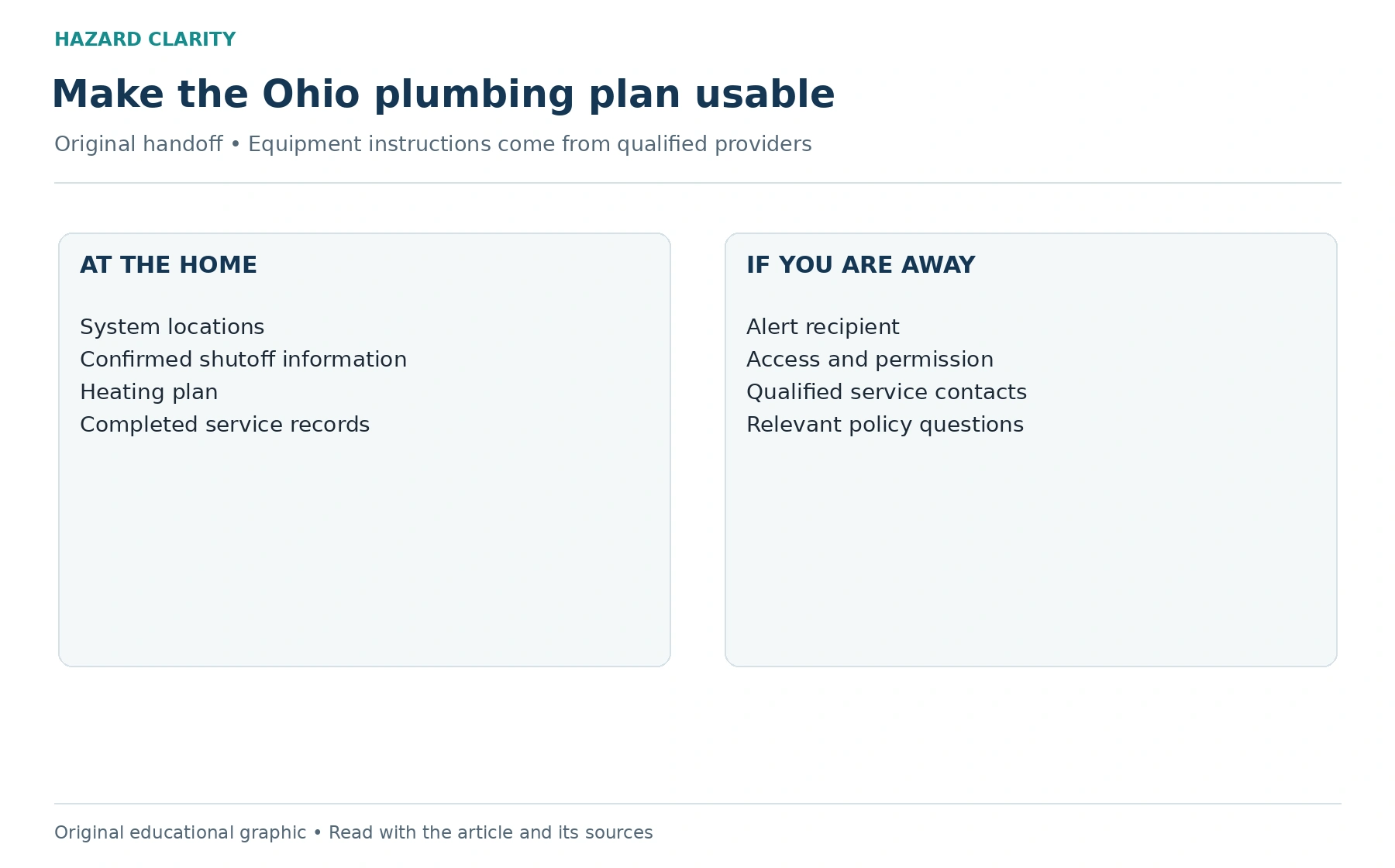
An Ohio freeze preparation plan starts with understanding the plumbing in your own home. The goal is to identify areas needing attention, locate the right shutoff, and decide who can respond if heat or water service is interrupted. You do not need to diagnose a concealed pipe or experiment with equipment to begin.
This guide combines an Ohio homeowner walkthrough with questions for a plumber and insurer. The checklist is a planning aid, not a technical winterization procedure. Equipment, building layouts, and policy conditions vary. Use qualified help for the actual system and keep the record of what was evaluated and completed.
Gather the plumbing history before the visit
Find previous inspection reports, repair invoices, and installation records. Note any earlier freeze, leakage, or recurring water concern. Identify the area involved and the scope of the work. A repair at one location does not establish that the whole system was evaluated for cold-weather exposure.
If you recently bought the home, ask for the records behind statements about winterization or replaced pipes. Keep seller descriptions separate from professional findings. A claim that the property has “never had a problem” may be useful context, but it does not replace an assessment of the current arrangement.
HC’s plumbing and insurance article provides background for organizing the records. Age alone is not a complete explanation of a plumbing system. Ask the provider what materials, locations, or installed conditions matter to the particular question you are trying to answer.
Walk the home without opening unfamiliar systems
List areas you want the plumber to review, such as an unheated space, an addition, a rarely used room, or exposed plumbing you can already see. Describe how each area is used and heated. Do not remove building materials or enter an unsafe space simply to improve the list.
Note any changes since the last winter. A room may now be closed off, a renovation may have altered the space, or a household routine may leave part of the building unused. Give that information to the plumber rather than deciding on your own whether it changes freeze exposure.
Use a sketch to connect room names with observations. “Bathroom beside the north garage wall” may help a provider find the location faster than a close-up of an unidentified pipe. Mark questions rather than technical conclusions. The professional should determine which parts of the system need evaluation and what work is appropriate.
Learn which shutoff serves which purpose
Ask a plumber to identify the relevant main shutoff and explain its operation during an appropriate visit. If the home has more than one water system or a complex arrangement, clarify what each control serves. Do not assume a convenient valve shuts off all water to the building.
Record the location and instructions in a household document that another adult can find. Ask what to do if the valve is inaccessible, unfamiliar, or does not operate as intended. Testing, repair, and replacement should be directed by the qualified provider. A label is useful, but it should be based on confirmed information.
Include the water utility or service provider’s contact route where relevant. A problem with an interior valve and a question about public service may require different people. Make that distinction before an urgent situation. The response plan should help someone contact the appropriate provider without improvising work on equipment they do not understand.
Ask for an actual freeze preparation scope
When arranging professional work, ask what systems and areas are included. A limited service on an outdoor connection is different from a broader review of plumbing exposure. If the home has irrigation, a detached structure, or specialized equipment, ask whether those systems require separate attention.
The proposal should identify the location and task, not just say “winterize.” Ask what the provider expects you to do afterward and whether any system will be left out of service. Keep those instructions with the completed work record. A future household member or contractor should understand the resulting arrangement.
Avoid adopting a neighbor’s procedure without checking your own equipment. Similar-looking homes may have different plumbing routes or installed components. Instructions for one device may not apply to another. Ask for model-specific guidance and qualified evaluation whenever the setup is uncertain.
Connect the plumbing plan with the heating plan
Ask the heating provider and plumber which concerns depend on the continued operation of heat in the home. They may address different systems, so explain the same household use and travel plans to both. Avoid assuming that one provider’s service includes a review of the other system.
Build a plan for an interruption while you are away. Identify who receives alerts, who can enter the property, and who can contact professional help. Confirm that the helper understands the role and has the required permission. Receiving a notification is not the same as being able to respond to it.
Keep backup heating questions with qualified professionals and official safety guidance. Do not improvise a heating arrangement to solve a plumbing concern. The plan should address how the household will get appropriate help, how conditions will be reported, and who is responsible for following through.
Use Ohio insurance guidance to frame the questions
The Ohio Department of Insurance’s winter coverage discussion addresses burst-pipe damage and preparation. It is a useful starting point for an Ohio homeowner, while the actual policy and facts of a loss determine the company’s response.
Ask your licensed agent or insurer how freeze-related damage is addressed under your contract. Identify relevant duties, exclusions, deductibles, and any conditions concerning heat or an absence. Explain your real plans. A short holiday trip, a move, and a seasonal shutdown may raise different questions.
Ask whether the company requires records of maintenance or completed changes. Keep its answer with the policy, rather than relying on a general statement that “burst pipes are covered.” That phrase may omit conditions or distinctions between damage to a component and resulting damage elsewhere in the home. Ask for an explanation that matches the scenario you are discussing.
Separate a leak from an assumed cause
If water appears, describe what you see and when you noticed it. Do not call it freeze damage simply because the weather is cold. The cause may need evaluation. Share the service history, photographs taken safely, and any alerts with the appropriate provider and insurer.
Follow policy reporting and protection requirements safely if a loss occurs. Ask the company how to arrange needed mitigation and what documentation to retain. A contractor’s repair recommendation and an insurer’s coverage determination are different parts of the process. Keep each answer attached to the question it actually addresses.
If a dispute or unanswered consumer question remains, use the official Ohio insurance assistance route linked through the department’s resources. Avoid treating an online generalization as the last word about your contract. Keep notes of communications, dates, and the information the company requested so the discussion remains organized.
Make the plan usable by another person
Your winter plumbing record should include locations, contacts, equipment information, and instructions supplied by qualified providers. Keep a secure copy available outside the home. A trusted person helping while you travel should receive only the information needed for the agreed task, not an assumption that they can handle every repair.
For example, the helper’s role might be to notify you if an alert occurs, arrange access for the service company with your permission, and retain a record of the visit. Make it clear when emergency resources are appropriate and when the helper should avoid the area. Do not assign risky troubleshooting through a checklist.
Use HC’s Ohio seasonal readiness guide to connect the plumbing file to broader household preparation. Keep the system-specific instructions from your providers in the same planning folder, clearly labeled so they can be found without searching through every document about the property.
Give detached and shared spaces their own review
A detached garage, shared utility area, or separate occupied unit may not fit the main house walkthrough. Identify the systems serving each space and ask whether the preparation appointment includes them. Keep their shutoff and contact information distinct if the arrangements differ.
Where another owner, association, or landlord controls a system, ask how preparation and reporting are handled. Explain the concern and obtain the practical contact route. Avoid assigning responsibility based only on who uses the space most often.
If a provider says a particular area needs separate work, add that task with an owner and target date. A completed visit to the main building should not close it accidentally. Keeping separate areas visible is especially helpful when you travel, because the person checking the property may otherwise focus only on the occupied rooms. The response file should describe the spaces included and identify any limits to the helper’s agreed role.
Close the open questions before the cold period
Review the task list after the service visit. Mark completed work only when the provider’s record confirms it. Leave pending parts, additional evaluations, and unanswered policy questions open with a responsible person and next date. A list of appointments is useful, but it should show what results are still needed.
A homeowner who can explain the plumbing arrangement, heating dependency, and response contacts is better positioned to ask for timely help. That understanding does not guarantee the pipes will never freeze or that every event will be insured. It gives the household a clear route from a concern to an appropriate action.
Begin with the areas you know, ask a plumber about the areas you do not, and bring the resulting records to your insurer when relevant. For an Ohio home, that is a practical fall routine: qualified preparation, specific policy questions, and a response plan another person can actually use.
Sources and reference material
Ohio Department of Insurance December 2025 newsletter winter coverage discussion • Reviewed October 3 2026.
See this property’s own hazard picture.
Check an address