On this page
- Describe the gathering before asking about coverage
- Ask how liability and medical payments differ
- Walk the route guests will actually use
- Discuss alcohol using the real arrangement
- Give pets a hosting plan of their own
- Verify the role of hired providers
- Keep property and belongings questions separate
- Make emergency information easy to find
- Ask about limits without treating higher as automatically right
- Finish with a short hosting question record
- Sources and reference material
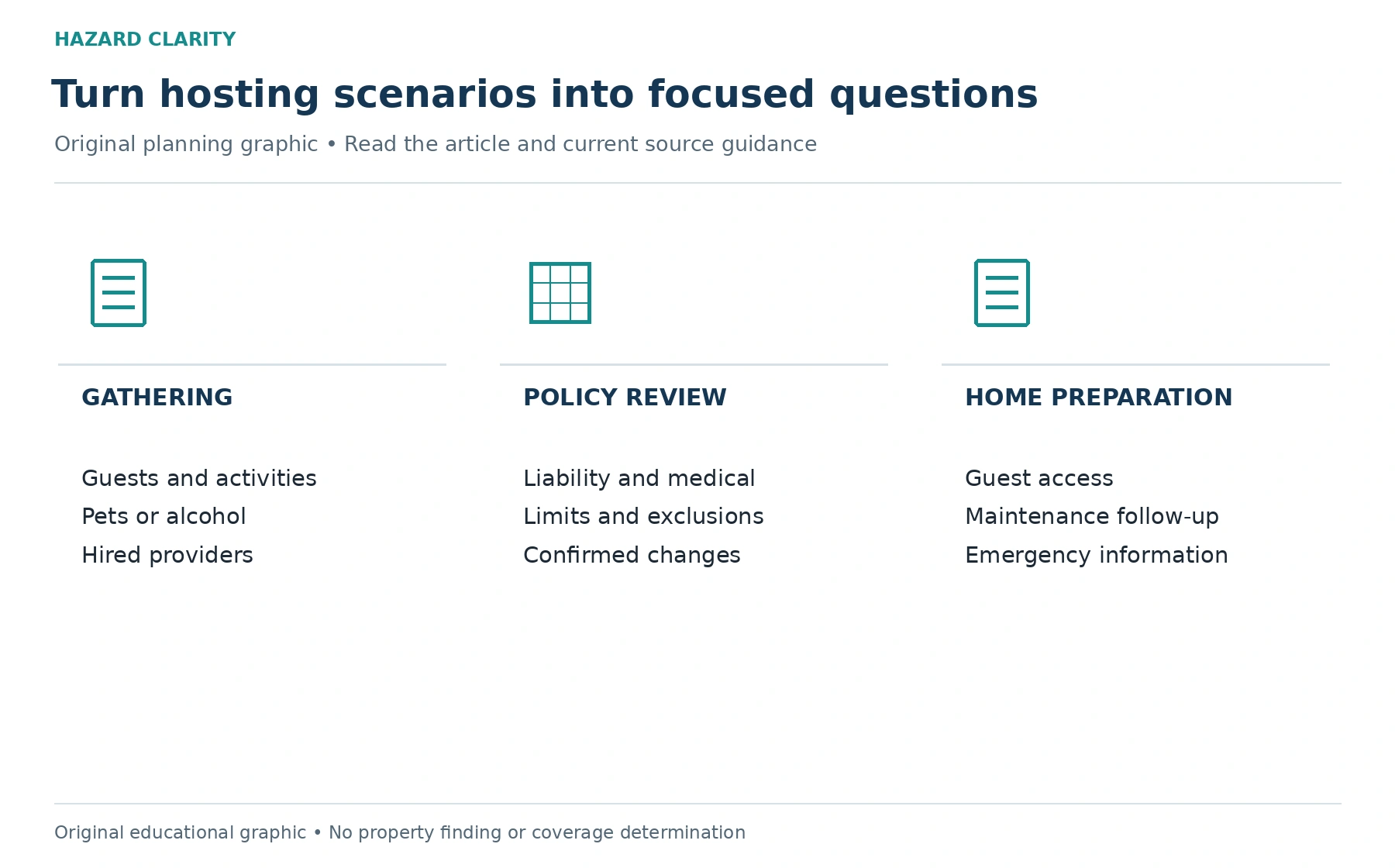
Thanksgiving hosting usually starts with a menu and a guest count. Add one earlier conversation to the plan: ask your licensed insurance professional about the situations you actually expect at the gathering. That might include visitors using the home, pets, alcohol, or hired help. A specific scenario is easier to discuss than a broad question about whether Thanksgiving is covered.
This guide organizes that conversation while keeping ordinary home preparation in view. It does not determine liability, interpret state alcohol laws, or promise payment after an injury. Your policy, the facts, and any applicable legal requirements control those questions. The useful result is a clear set of answers you can understand before guests arrive.
Describe the gathering before asking about coverage
Tell the agent whether this is an ordinary private family meal or something with a different purpose, such as a paid event or business activity. Identify the expected guests and activities that concern you. You do not need to share a full guest list to explain that children, overnight visitors, or hired service providers will be present.
Mention relevant changes from your usual household routine. Will a room normally used for storage become guest space? Will visitors use a pool, outdoor area, or other feature? Are you hiring a caterer or another provider? Ask which details matter to the insurer rather than assuming that every holiday gathering raises the same questions.
The NAIC event insurance resource encourages homeowners to discuss home events and liability concerns with their agent, particularly when alcohol is involved. Use that as a prompt for your actual policy review. It does not mean every family meal needs a separate event policy.
Ask how liability and medical payments differ
Find the relevant sections in your homeowners or renters policy and ask the company to explain their purposes, limits, and conditions. Personal liability and medical payments should not be treated as interchangeable simply because both may come up when a guest is injured. Request an explanation using a scenario you understand.
For example, ask how the company would review a visitor’s injury on an entry route, without declaring who would be legally responsible. What information would it need? Which policy sections might be relevant? The agent can explain the contract, while legal responsibility depends on the facts and applicable law.
Keep the written explanation with the policy. If a limit review is appropriate, ask what options are available and how any actual change becomes effective. Do not assume an estimate or quote changes the existing agreement. Give yourself time to ask another question before the holiday rather than relying on a rushed conversation.
Walk the route guests will actually use
Start where visitors park or are dropped off, then follow the path to the entrance and gathering areas. Note visible conditions needing attention, including lighting, loose components, or a difficult walking surface. Describe the location and ask an appropriate provider about repairs. A familiar route can look very different to someone visiting for the first time.
Think about guests with mobility or vision needs and ask respectfully what would help. A different entrance may be useful, but it should be suitable for the actual person and circumstances. Do not improvise structural modifications from an online illustration or assume that an alternate route automatically resolves every access concern.
Keep the provider’s findings and any unfinished work visible. If a repair cannot be completed before the gathering, seek appropriate guidance and communicate the practical change. Asking an insurer about liability does not replace addressing a known maintenance concern. Preparation and coverage review should move alongside each other.
Discuss alcohol using the real arrangement
If you plan to serve alcohol and have coverage questions, say so directly to the licensed agent. Explain whether this is a private home gathering or another kind of event. Ask what policy terms matter and whether additional review is appropriate. Avoid relying on a guest’s assurance that your normal policy covers everything.
Questions about host responsibility and alcohol laws should go to an appropriate legal or official source for the jurisdiction. This article does not state a nationwide rule. The insurance discussion and legal obligations are related, but one does not determine the other. Keep that distinction clear when asking for advice.
Plan practical guest transportation and household arrangements directly with the people involved. A designated role or ride plan needs agreement to be meaningful. These are useful hosting decisions even when you are not changing insurance. Do not let a policy conversation become a reason to leave ordinary preparation unaddressed.
Give pets a hosting plan of their own
Consider how your pets normally behave around visitors and what arrangement is appropriate during a busy gathering. Talk with the relevant care professional if you need guidance. Do not assume a pet that is comfortable with your household will respond the same way to a crowded room or unfamiliar children.
Ask the insurer about any policy terms relevant to the pets and scenario you describe. Identify exclusions or questions the company wants clarified rather than assuming all animal-related incidents are handled alike. Keep the answer attached to the actual policy and facts. A general article cannot establish the response to a particular incident.
Communicate the agreed household plan to family members and caregivers. If a pet will stay in a separate area, decide who handles its care and how that area is managed. Avoid making the arrangement depend on every guest remembering a casual instruction delivered during the meal.
Verify the role of hired providers
If you hire catering, cleaning, entertainment, or another service, understand which business is responsible for the work and what the agreement includes. Ask about relevant qualifications and insurance evidence, and use qualified help to interpret documents when needed. A provider’s advertisement should not be the only record you hold.
Ask your own insurer what information it needs about the arrangement. A provider’s coverage and your policy can address different questions. Do not assume that receiving a certificate transfers every responsibility away from the homeowner or guarantees payment after a loss. Describe the actual work and location.
Keep the provider’s contact, agreement, and important instructions with the hosting file. Identify who handles access and questions on the day. A clear contact route can keep the cook from becoming the default coordinator for every delivery, equipment question, and arriving crew member during meal preparation.
Keep property and belongings questions separate
If you are concerned about damage to the building or belongings, ask which policy sections address the relevant scenario. Damage to your own property and a liability claim involving someone else can raise different questions. Avoid treating the word accident as a complete coverage explanation.
Gather useful records for belongings you would have trouble describing from memory. A home inventory supports information gathering, but it does not set the insurer’s settlement terms. Ask about applicable limits, deductibles, and the evidence the company would need. Keep any answer with the actual policy documents.
HC’s replacement cost and actual cash value guide can help organize those settlement questions. Use it to understand the terminology before asking about your own contract. The value of an item in your records and the amount payable under a policy are not automatically identical.
Make emergency information easy to find
Keep appropriate emergency contact information accessible and ensure household adults know the home’s escape plan. Review the alarm and exit arrangements before the gathering, using the actual device instructions and official guidance. A host should not need to search through a policy folder to find an emergency number.
The USFA home fire escape resource is a useful official reference for that preparation. Consider visitors who are unfamiliar with the layout and people who may need assistance. Keep the plan understandable rather than turning arrival into a long technical briefing.
Store the insurer’s claim contact separately for use after an incident when appropriate. If someone is injured or an immediate hazard occurs, the emergency response comes first. Record information when safe, follow the company’s reporting instructions, and seek qualified advice for legal or coverage questions that remain.
Ask about limits without treating higher as automatically right
If you want a limits review, discuss the household’s circumstances and the coverage you already hold. Ask how any additional option relates to the existing policy and what eligibility or conditions apply. A general hosting article cannot identify the appropriate amount for your finances and activities.
Request a clear comparison of the current terms and any proposal. Keep premiums, limits, exclusions, and effective dates tied to the correct option. Ask which decision would actually change coverage and how confirmation is provided. A preliminary conversation is useful, but it should not be mistaken for a completed policy action.
If the answer remains unclear, ask the agent to explain it using the gathering scenario you originally described. HC’s insurance inspection article can provide background for property questions, while the company must address the specific contract and hosting arrangements.
Finish with a short hosting question record
Write down the scenario, the question, the answer, and any action still needed. Separate an insurance follow-up from a repair task or household decision. One may require the agent’s written clarification; another may need a contractor appointment; another simply needs agreement among the adults hosting.
Keep the record useful for future gatherings without assuming every answer applies forever. A paid event, different provider, new pet, or changed property use may require another conversation. Update the facts rather than recycling the same question after the arrangement has materially changed.
The goal is a welcoming gathering supported by practical preparation and a policy you understand more clearly. Ask early, describe real scenarios, and address the home tasks alongside the coverage conversation. Then Thanksgiving can stay focused on the people around the table, with fewer unanswered questions sitting in the background.
Sources and reference material
NAIC Event insurance • Reviewed October 3 2026.
USFA Escape plans • Reviewed October 3 2026.
See this property’s own hazard picture.
Check an address