On this page
- Separate the trip from a change in property use
- Review open maintenance work first
- Ask about heating using the actual equipment
- Make plumbing preparation a provider question
- Choose a helper whose role is realistic
- Check alerts and access before leaving
- Prepare the ordinary home tasks you will appreciate later
- Review insurance without assuming travel changes everything
- Plan how a change will reach everyone
- Keep a return note with the departure checklist
- Sources and reference material
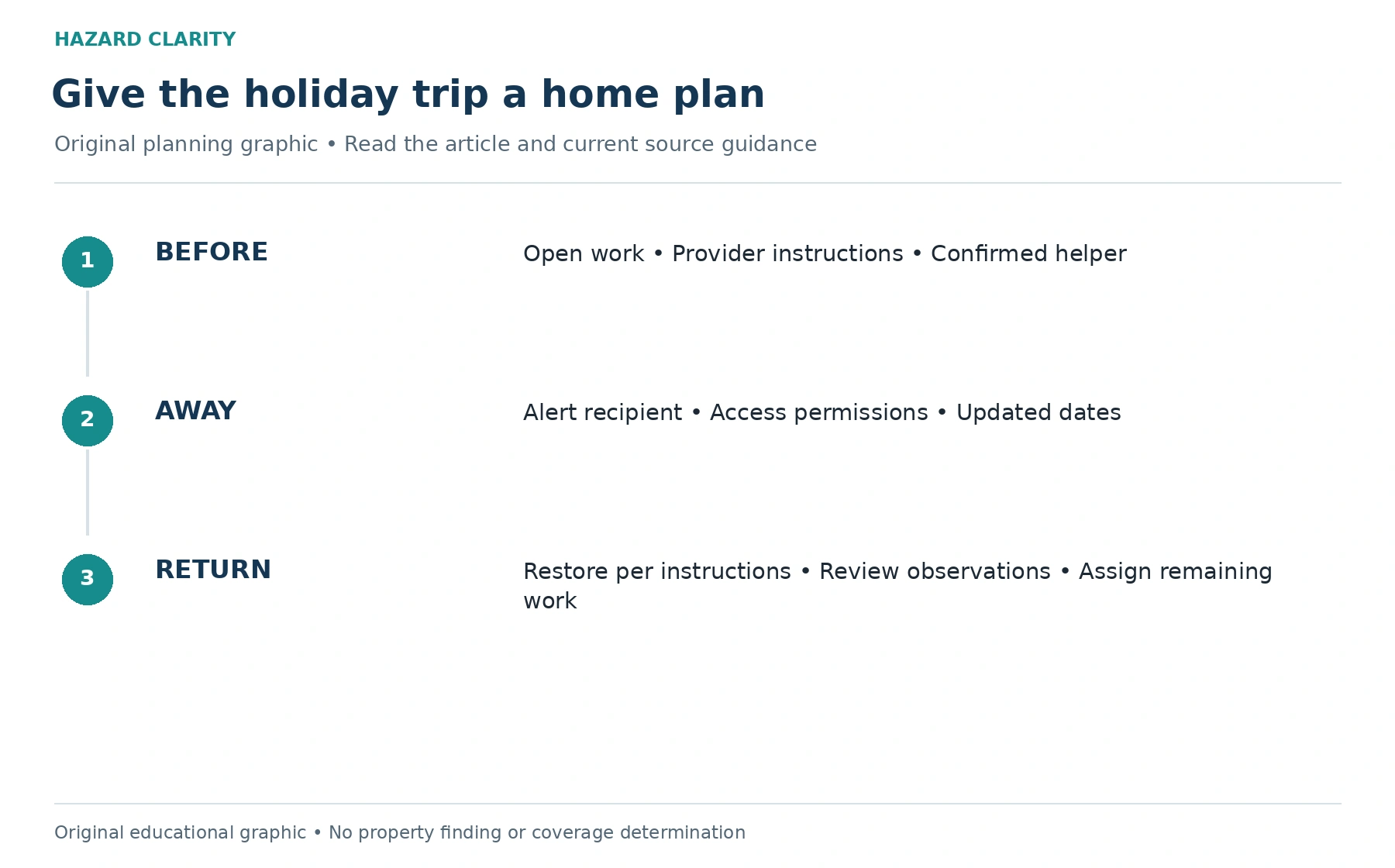
A Thanksgiving trip should not depend on remembering whether you left a provider’s phone number on the refrigerator. Before you leave, create a short home plan that another person can use: what needs attention, who receives alerts, how access works, and which questions you still need to ask. Then put the travel itinerary back at the center of your week.
This guide is for a short holiday trip from your usual occupied home. Selling an empty property, moving out permanently, or offering the home to paying guests involves different questions. Describe your actual plans to the appropriate providers and insurer. The purpose here is practical preparation for an absence, with enough detail to make your return easier.
Separate the trip from a change in property use
Write down the departure and expected return dates. Note who will remain at home, whether anyone will stay there while you are away, and whether the arrangement may change. A short visit to family and an extended transition between occupants should not be treated as interchangeable just because both involve travel.
If the trip could become longer, identify whom you need to notify. Your helper, service provider, and insurer may need updated information depending on the circumstances. Record the contact route before departure. You do not need to invent a policy deadline to recognize that a changed plan deserves a fresh question.
Ask your licensed agent whether any relevant absence or heating conditions apply under the actual policy. Keep the answer with the dates and arrangement you described. A general article cannot establish that your home meets every condition. The useful preparation is a precise conversation while you have time to clarify an unclear response.
Review open maintenance work first
Look through your recent service reports and identify recommendations that are still open. A furnace visit, plumbing repair, or exterior project may have a follow-up appointment pending. Decide whether an item needs attention before travel and ask the qualified provider when you are unsure. A booked service visit is not evidence that work is finished.
Give each remaining item a next action. Perhaps the contractor needs to confirm a delivery date, or a plumber should explain an observed condition. Keep the work location and scope beside the action so you do not have to reconstruct the question from an invoice when the provider calls.
HC’s insurance inspection guide can help organize property questions if an insurer has requested information. Preserve any company instructions and deadlines as written. Complete the required response process rather than assuming a travel checklist satisfies a separate insurance request.
Ask about heating using the actual equipment
Use the installed heating system’s instructions and qualified provider guidance for the planned absence. Ask what routine care is appropriate and what the household should do if operation stops. Do not copy an arbitrary thermostat setting from a general article and assume it fits every home or policy.
Identify separate equipment in an addition, detached workspace, or other area you use. Ask whether it needs its own preparation. The main system’s service record may not describe those components. Include the relevant model and provider information so a helper can reach the appropriate company without guessing which equipment is affected.
The USFA heating safety resource provides official background for household heating plans. Keep technical adjustments and unfamiliar backup arrangements with qualified people. Departure day should not become the first time you try a procedure you do not understand.
Make plumbing preparation a provider question
Gather the relevant plumbing service information and instructions for the home’s systems. If you are unsure about a control, outdoor connection, or equipment arrangement, ask a qualified plumber what is appropriate for this trip. A short absence and a professionally winterized shutdown can involve different plans.
HC’s plumbing and insurance article helps organize records and questions. Use it alongside the actual provider’s instructions. Do not assume that one visible valve controls every water use or that an unfamiliar shutdown procedure is harmless because a neighbor follows it.
If a provider recommends an action, record what systems it affects and what must happen when you return. Make those instructions accessible to the household. A departure checklist should not leave you wondering why a component is out of service after the trip. Keep a completed work record for any professional preparation.
Choose a helper whose role is realistic
Ask someone whether they can support the home during the specific dates. Explain the task and let them confirm availability. A nearby friend may be comfortable receiving an alert but unable to visit during work hours. Another person may be able to coordinate access for a provider but should not be expected to diagnose equipment.
Agree on the communication route and any check-in arrangement. This article does not prescribe a universal visit frequency. Match the plan to your needs and any requirements confirmed by the insurer or provider. If the helper has other commitments, identify an alternate person rather than treating an uncertain availability as a completed plan.
Keep permissions clear. If you want someone to arrange a service appointment, discuss what they may authorize and how they should reach you. A contact list alone does not grant spending authority. The helper should know when to seek emergency assistance and when to contact a qualified provider through the agreed route.
Check alerts and access before leaving
Review any monitoring devices you actually use. Follow their approved testing instructions and confirm the intended recipient can receive a notification. Ask what power, internet, account, or service dependencies exist. A device’s presence does not tell you whether the entire alert route will function during every interruption.
Name device locations clearly. A message about a basement sensor should lead to a known area, not a search through the home. Provide the helper with enough information to understand the alert and contact assistance, while keeping hazardous investigation outside their role. Notifications should support the response plan you agreed on.
Review keys and entry arrangements with appropriate care. Use the equipment instructions for any account or access changes, and share only what the helper needs. Keep private financial records and unrelated personal information out of a general home folder. You can make the response usable without handing over every household document.
Prepare the ordinary home tasks you will appreciate later
Walk through the areas you use daily and follow relevant appliance instructions for an absence. Identify unfinished chores, items blocking an access route, and household responsibilities someone else needs to know about. Keep this practical: you are preparing a lived-in home for a trip, not trying to turn every room into a risk audit.
Confirm arrangements for pets, deliveries, and planned service visits directly with the people involved. These are organizational tasks, and their value comes from agreement. A note in your own calendar does not establish that a provider or helper knows you will be away during the appointment.
Keep an accessible list of the home’s essential contacts. Include utilities, qualified service providers, the insurer’s appropriate reporting route, and the helper’s alternate contact. Separate emergency numbers from routine service information so someone can identify the right route when a condition needs immediate attention.
Review insurance without assuming travel changes everything
The NAIC winter preparation resource is a starting point for seasonal coverage questions. Ask the company about your actual trip, property arrangement, and any concern you have. Keep the discussion tied to the policy rather than seeking a blanket promise that holiday travel is covered.
If you want to understand what happens when damage is discovered while you are away, ask about reporting, documentation, and safe protection of the property. Identify who can contact the company and what information they should have. Do not assume a helper’s observations will replace the professional findings the insurer requests.
Keep the response in the travel home file. If the company refers to a policy condition, retain that wording and ask for clarification if necessary. A quote or conversation about a possible change should not be treated as an effective amendment. Confirm any actual policy action through the company’s established process.
Plan how a change will reach everyone
Travel can change without warning. An extra night with family, a delayed return, or a helper’s illness can affect the home arrangement. Decide who receives an update and how the new dates will be recorded. Keep the contact list short enough that you can make those updates reliably.
If the home develops a problem, distinguish the household decision from the service and insurance processes. A qualified provider may recommend repair; the insurer may request information; you may decide to return earlier. Preserve the reason and source for each instruction rather than combining them into one message that loses important details.
Use an ordinary scenario to check the plan: a heating notification arrives and the main helper cannot visit. Who is next? Can that person access the information and reach a provider? A short discussion can reveal missing permissions or contacts without disconnecting equipment or staging a problem.
Keep a return note with the departure checklist
Write down anything you will need to restore or review when you get home, based on the actual provider or appliance instructions. Include scheduled appointments, unresolved maintenance, and messages from the helper. The return note keeps a temporary arrangement from becoming a forgotten permanent change.
After travel, compare observations with the record left before departure. If something appears unusual, seek the appropriate assistance and preserve the facts when safe. Do not enter a hazardous area to complete the checklist. Your home plan should help you contact the right people, not persuade you to troubleshoot unfamiliar equipment.
Save the checklist for the next trip and update it as the household changes. Good preparation does not need to be elaborate. It needs accurate dates, a realistic helper role, useful equipment information, and a clear route to assistance. Those details let you leave with fewer loose ends and return to a home whose next steps are easy to understand.
Sources and reference material
USFA Heating fire safety • Reviewed October 3 2026.
NAIC Winter insurance preparation • Reviewed October 3 2026.
See this property’s own hazard picture.
Check an address