On this page
- Start with the dates that change responsibility
- Describe the home’s actual use
- Make the handoff fit the person receiving it
- Record controls using confirmed information
- Carry unfinished work forward
- Connect winter care to the installed equipment
- Give belongings their own moving record
- Share access without sharing everything
- Test the handoff with one realistic scenario
- Sources and reference material
A winter move gets easier when the next person can find the home’s essential information without calling you from a dark utility room. For military families, that person might be a spouse, a property manager, a buyer, or a trusted friend helping during a relocation. The boxes matter, but so does the record of who is responsible for the property while your plans change.
For Veterans Day, we’re focusing on a practical home readiness handoff. This is useful whether you are preparing for a permanent change of station, leaving for an extended assignment, or moving as a veteran years after service. Your military connection does not establish an insurance benefit or tell us how your policy works. Actual dates, property use, equipment instructions, and the people involved should guide the plan.
Start with the dates that change responsibility
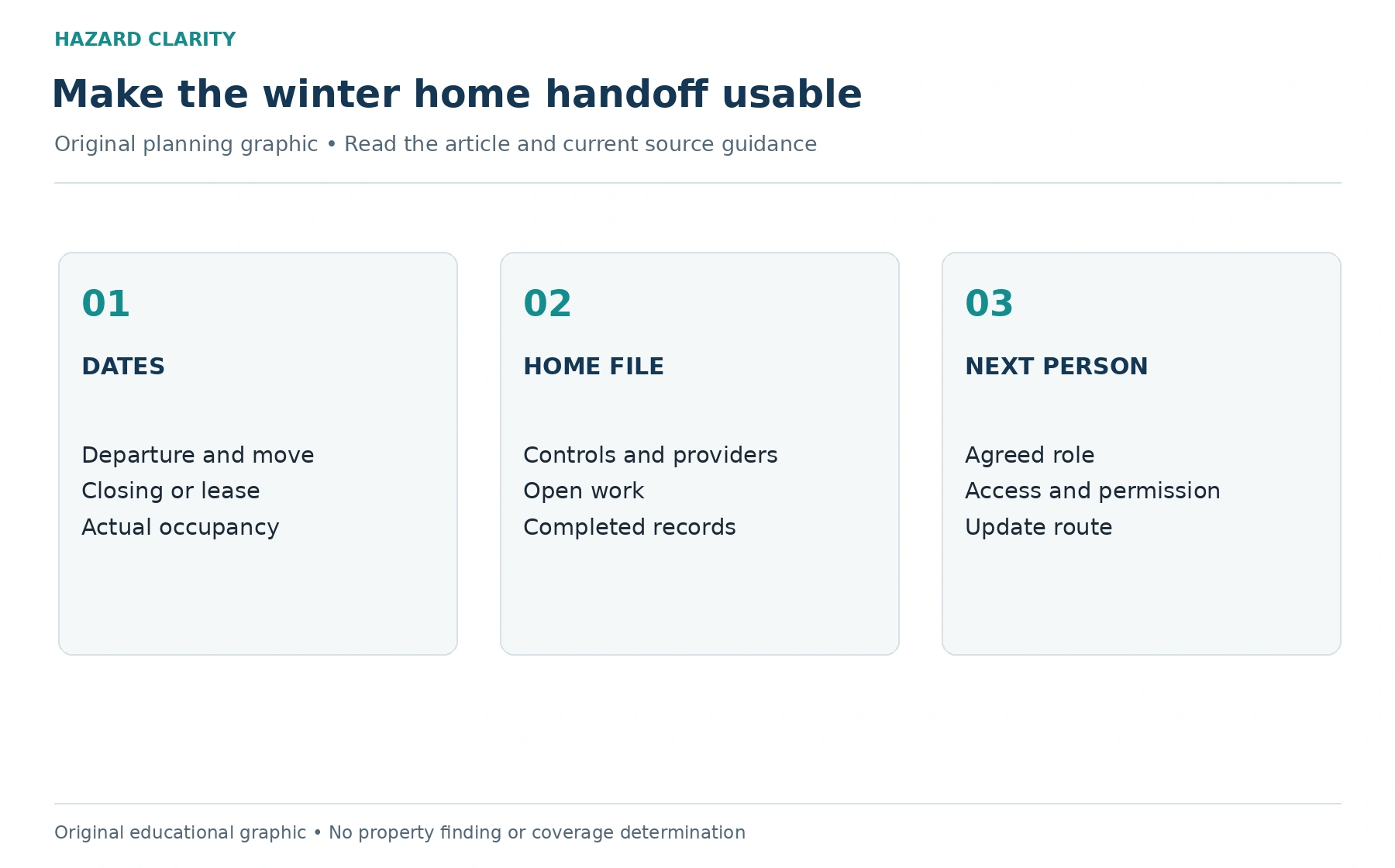
Write down the expected departure date, moving date, closing or lease dates, utility transfer dates, and the day someone will actually begin living at the destination. Keep each event separate. A closing on Friday and a move on Tuesday are different facts. So are owning an empty home and having a family member continue living there.
Use the timeline to identify questions rather than assigning coverage yourself. Who holds the existing policy? Who needs to arrange the next policy? Is there a period when you own both homes? Will belongings be stored somewhere between addresses? If a date is uncertain, mark it as provisional and name the person who will confirm it.
HC’s insurance timing guide for homebuyers can help organize the purchase side. Ask the insurer and lender to confirm their requirements for your transaction. The moving company’s schedule should not become the assumption behind a policy effective date.
Describe the home’s actual use
Tell your licensed agent what will happen at the home after departure. Will a household member remain? Will all belongings leave? Are you planning to sell, rent, renovate, or return later? Describe those facts before asking which coverage arrangement is appropriate. Avoid relying on your own interpretation of words such as vacant or unoccupied.
The NAIC’s military insurance resource flags deployment-related questions, including vacancy provisions. Use that as a prompt for a policy conversation, not a universal rule about how long any home may be empty. Ask which provisions apply, what changes must be reported, and when the company needs an update.
Save the response with the policy documents. A helpful written answer identifies the property, the arrangement you described, and any follow-up required if circumstances change. If a planned sale becomes a rental, revisit the question. A friend stopping by periodically does not automatically settle the home’s insurance classification.
Make the handoff fit the person receiving it
A property manager needs different information from a friend who has agreed to watch for visible problems. Ask what each person can realistically do. One may coordinate service appointments; another may only be available to notify you. Do not hand someone a long maintenance list and assume they have accepted responsibility for everything on it.
For a household member who will stay, include familiar routines and the tasks you normally handle. For a buyer, preserve equipment records and outstanding recommendations without promising that every system has been inspected. For a helper, concentrate on access, communication, and contacting qualified assistance when something appears wrong.
Agree on the handoff date and communication method. A shared folder can support the plan, but a folder alone does not establish that the recipient has read it. Walk through the important information together and invite questions. The practical test is whether the person knows where to begin when they need help.
Record controls using confirmed information
Keep locations and instructions for relevant water controls, heating equipment, and other systems in the handoff. Use information supplied by qualified providers or the equipment documentation. If you cannot confidently identify a control, arrange clarification before departure. Labeling an unfamiliar valve from a guess can make the next person’s job harder.
Describe the location in ordinary language: the main water control identified by the plumber beside the basement utility entrance, for example. A photograph can help if it can be taken safely and shows enough surrounding context. Include what the provider told you to do if the control is inaccessible or does not operate properly.
Keep hazardous repair work outside the helper’s role. Someone can know which plumber to call without being expected to troubleshoot plumbing. If the building has multiple units or shared systems, distinguish what serves your space from what is controlled elsewhere. Put the appropriate manager or utility contact beside that information.
Carry unfinished work forward
An unresolved service recommendation should remain visible after the move. List the concern, its location, the provider who evaluated it, and the next action. Identify whether work has been proposed, authorized, scheduled, or completed. Those statuses should not collapse into one checkbox that says the system was handled.
For example, a furnace visit may be complete while a replacement component is still on order. The handoff should explain who will arrange the return appointment and where the original report is stored. A roof repair proposal may still require a decision. Preserve the proposal’s scope so the next person understands the question being considered.
If work must happen after you leave, agree on how access and authorization will work. Set any spending permissions directly with the person involved rather than implying them through a checklist. Include an alternate contact if you will be difficult to reach. Personal arrangements should be explicit enough that a helper is not left guessing.
Connect winter care to the installed equipment
Gather current heating service records and the manufacturer or provider instructions for routine care. Tell the person receiving the handoff how the home is normally used and whether any areas require separate attention. An attached addition, detached structure, or separate heating appliance may not be included in the main equipment service visit.
Ask qualified providers what preparation is appropriate for the home during the planned transition. Avoid copying a neighbor’s winterization procedure or assuming a single thermostat setting satisfies every equipment and policy requirement. If the home will be shut down, obtain a defined professional scope and instructions for restoring affected systems.
Include the dates and results of completed work. The record should explain what changed and which systems remain operational. If an insurer has identified relevant heating or absence conditions, store that answer separately from the contractor’s instructions. Equipment care and policy terms both matter, but they come from different sources.
Give belongings their own moving record
Make a record of items before packing, particularly those you would have trouble describing or replacing from memory. Keep photographs, receipts when available, and identifying information in a secure location you can access outside the home. Group the records by destination if belongings will go to more than one place.
Ask about protection during transport and storage using the actual arrangements. Who is moving the items? Is storage temporary? Where will it be located? What documents does the mover provide? The NAIC’s moving insurance discussion provides background for those questions. Read the agreements rather than assuming that one policy follows every item through every stage.
Keep an inventory separate from a packing list. A box labeled kitchen is useful for unloading; it may not identify the belongings inside for an insurance conversation. Likewise, the mover’s valuation arrangement and your own insurance should be reviewed on their own terms. Ask which process applies if an item arrives damaged.
Share access without sharing everything
Give the recipient only the access needed for the agreed task. Discuss keys, entry instructions, appointment access, and the route for reporting problems. Keep personal account credentials, financial documents, and unrelated family information out of a broadly shared handoff folder. A provider contact list rarely needs your entire household archive.
If you will use remote alerts, confirm who receives them and who can act. Notifications sent only to a phone you cannot check regularly create a different arrangement from alerts shared with someone nearby. Ask the helper to confirm availability during the relevant dates, and decide how you will communicate a change.
Review access again when responsibility transfers. A buyer, new tenant, or different manager may need their own arrangements. Use the appropriate equipment and account instructions for those changes. The goal is a clear transition, with each person able to perform their agreed role and the records kept with the correct household.
Test the handoff with one realistic scenario
Before leaving, ask the recipient to walk through a simple example: a heating alert arrives while you are traveling. Where is the equipment information? Who should be contacted? Does the helper have permission to arrange access? What happens if the regular provider is unavailable? This is a conversation exercise, not a request to create an equipment failure.
A second useful scenario is a changing move date. Who updates the insurer, utility, manager, and destination arrangements? Keep a short list of those contacts beside the timeline. This prevents a revised flight or closing date from leaving the home plan behind while everyone updates the travel itinerary.
Finish by identifying the first open action and its owner. Save the home handoff with your moving records and give the recipient a usable copy. Military moves can involve enough decisions already. A clear property file lets the next person find the right information, reach qualified help, and keep unfinished tasks from disappearing between addresses.
Sources and reference material
NAIC Military service members and families • Reviewed October 3 2026.
NAIC Moving places changing spaces • Reviewed October 3 2026.
See this property’s own hazard picture.
Check an address